

Turning Everyday Lighting Into a Design Feature
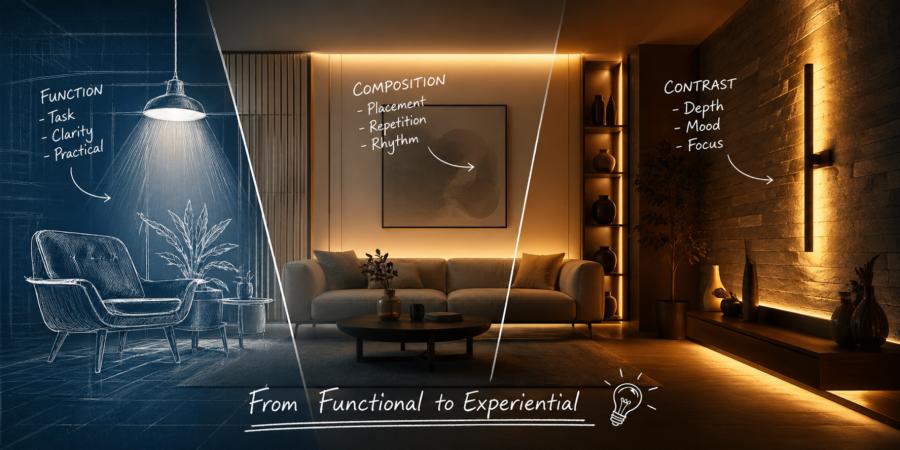 A room can be perfectly furnished, carefully arranged, and still feel oddly unfinished—like a sandwich with excellent fillings but no bread. Lighting often plays that missing role, quietly doing its job without ever being asked to do anything more interesting. Yet with a shift in perspective, everyday lighting can move from silent utility to a defining design element that shapes how a space feels, functions, and even behaves.
Seeing Light as Material, Not Just Output
Light is usually treated like a background service—expected, necessary, and largely ignored unless it fails. But when approached as a material, something changes. It becomes something you can shape, layer, and compose just like wood, metal, or fabric. The difference is that light doesn't sit still, which makes it far more interesting and occasionally a bit rebellious.Designing with light as a material starts with understanding its qualities. Direction, intensity, and color temperature are the obvious ones, but shadow is just as important. A single overhead fixture flattens everything, while layered sources create depth and variation. That depth is where a room begins to feel intentional rather than merely lit.
There's also the matter of restraint. Not every surface needs to be illuminated equally. In fact, equal lighting often produces the most forgettable environments. Allowing some areas to fall into softer light creates contrast, and contrast is where visual interest begins to emerge.
Composition Through Placement and Rhythm
Lighting becomes a design feature when it participates in composition. Placement is no longer just about coverage—it's about structure. A row of fixtures aligned with architectural elements can reinforce geometry, while an off-center light can create tension that feels surprisingly deliberate.Repetition plays a quiet but powerful role here. When a lighting element repeats—whether it's a series of pendants or evenly spaced wall lights—it introduces rhythm. That rhythm guides the eye through the space, almost like a visual breadcrumb trail, except less edible and more stylish.
- Align fixtures with structural lines to emphasize order
- Use repetition to create a sense of continuity
- Break patterns occasionally to introduce focal points
Contrast as a Design Tool
Flat lighting is the visual equivalent of a monotone voice. It communicates, but it doesn't engage. Contrast—between light and shadow, warm and cool tones, bright and dim areas—adds dimension and personality.Strategic contrast can highlight textures, define zones, and create hierarchy within a space. A softly lit background with a brighter focal point naturally draws attention where it matters. This is particularly useful in multipurpose spaces where lighting can subtly signal how different areas should be used.
There's also an emotional layer to contrast. Warmer, lower lighting tends to feel more intimate, while cooler, brighter light suggests alertness and activity. Blending these within a single environment allows a space to shift its mood without moving a single piece of furniture.
Somewhere along the way, lighting stopped being just about seeing and started being about feeling. That shift is where design begins.
Balancing Practicality With Visual Impact
Even the most visually striking lighting scheme has to work. A dramatic pendant that leaves half the room in shadow might look impressive for about five minutes—until someone tries to read, cook, or locate a dropped object that has mysteriously vanished into the abyss.Function and aesthetics are not opposing forces; they simply need to negotiate. Task lighting ensures usability, ambient lighting provides general visibility, and accent lighting adds character. When these layers are combined thoughtfully, the result is a space that performs well without sacrificing personality.
A useful way to approach this balance is to ask a few blunt questions:
- What activities actually happen in this space?
- Where is precision needed versus where mood matters more?
- Can one fixture serve multiple roles without trying too hard?
Turning Fixtures Into Focal Points
There's a moment when lighting stops supporting the design and becomes the design. This usually happens when fixtures are treated as objects with presence rather than invisible tools. Shape, scale, and finish all start to matter in a more deliberate way.A large, sculptural light can anchor a room just as effectively as a piece of furniture. Smaller fixtures, when grouped or repeated, can create visual weight through accumulation. The key is intention. Random placement feels accidental; considered placement feels like a decision someone stood behind.
Scale plays a surprisingly emotional role. Oversized fixtures can feel bold and confident, while smaller, more delicate lights suggest subtlety. Neither is inherently better—it depends on what the space is trying to express. The important part is choosing one direction and committing to it, rather than hedging bets with something that quietly apologizes for existing.
Letting Light Do More Than Illuminate
Lighting has the ability to shape how a space is experienced over time. Dimmers, adjustable fixtures, and layered sources allow a room to shift from functional to atmospheric without requiring a redesign. Morning light can feel crisp and energizing, while evening light softens edges and slows everything down.This adaptability is where lighting becomes experiential. It responds to use, mood, and even habit. A well-designed lighting scheme doesn't just sit there—it participates. It knows when to step forward and when to recede, which is more than can be said for some furniture.
Bright Ideas That Actually Stick
When lighting is treated as a core design element, spaces gain depth, clarity, and character. It's no longer an afterthought added at the end, but a guiding force that influences how everything else comes together.There's something quietly satisfying about walking into a room where the lighting feels intentional. It doesn't announce itself loudly, but it shapes the experience in ways that are hard to ignore. And once that shift happens, it becomes difficult to go back to lighting that simply exists to keep the darkness at bay.
Article kindly provided by cplights.com
Latest Articles
- Why Mixing Photography Styles Can Produce a More Interesting Record of an Event
- How to Photograph a Room Without Making It Look Bigger Than It Really Is
- Why Layering a Scene Creates Wedding Photographs That Feel More Immersive
- The Quiet Design Details That Make Wedding Memories Feel More Personal
- The Psychology of Ceiling Height: How Vertical Space Changes the Way We Feel
- The Hidden Power of Product Demonstrations: Why Showing Beats Telling
- Beyond Family Portraits: Unexpected Photos That Make Stunning Wall Art
- Designing for Trust: The Hidden Visual Signals That Shape First Impressions
- Why Banner Design Is Still One of the Most Effective Local Marketing Tools
- Designing for Impatient People, and Why That's a Good Thing
- Borrowing Film Planning Techniques for Better Graphic and Web Design
- Designing with Light Instead of Filters: How Atmosphere Shapes a Photograph
- The Scent Wardrobe Principle: Designing Your Fragrance Collection Like an Interior Space
- How Small Visual Details Change the Entire Mood of an Image
- Turning Everyday Lighting Into a Design Feature
- Designing Photo Albums That People Actually Revisit
- Designing Illusions: How Sliding Wardrobe Doors Can Visually Reshape a Room
- Fit Over Fashion Why Tailoring Matters More Than Trends for Formalwear
- Why Fast Websites Matter More Than Beautiful Ones When People Are Choosing Where to Eat
- When Product Photos Quietly Sabotage Online Sales
- Architecture
- Graphic Design
- Web Design
- Industrial Design
- Interior Design
- Fashion Design
- Photography
- Product Design
- UI/UX Design
- Landscape Design
- Animation
- Industrial Engineering
- Packaging Design
- Branding and Identity Design
- Exhibit Design
- Advertising Design
- Typography
- Motion Graphics
- Sustainable Design
- User Research
- Fashion Merchandising
- Film and Video Production
- UX Writing
- Environmental Design
- Print Design
- Interaction Design
- Art Direction
- Textile Design
- Game Design
- Virtual Reality (VR) Design
- General Design Principles
- Event and Wedding Design