

Designing Illusions: How Sliding Wardrobe Doors Can Visually Reshape a Room
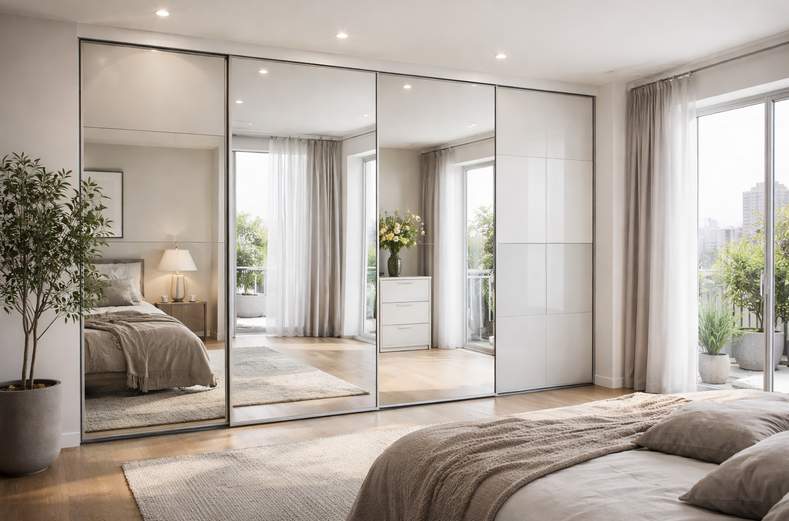 A small bedroom can behave like a much larger one when the surfaces in it stop acting shy. Sliding wardrobe doors are a perfect example. They do a practical job, of course, but their real talent is visual mischief. With the right finish, they can stretch a wall, amplify daylight, and make a room feel less boxed in, all without moving a single brick. For anyone who wants a space to feel calmer, brighter, and a little more generous, that is a useful trick to have up the sleeve.
Why Reflection Changes the Mood of a Room
Mirrored and glossy sliding doors work by bouncing light around instead of swallowing it. That simple shift changes everything. Natural light travels farther into the room, darker corners soften, and the eye keeps moving rather than stopping abruptly at a flat, dull surface. When the eye keeps moving, the room feels larger. It is not magic, although it does occasionally feel suspiciously close.This effect is especially powerful in bedrooms where space is limited. A mirrored door can double the visual depth of a wall, giving the impression that the room continues beyond its actual boundaries. Glossy finishes do something slightly different but equally useful. They do not reflect as sharply as mirrors, yet they still catch light and create a cleaner, more open feel. That softer gleam can be ideal if a full reflection sounds a little too committed before breakfast.
There is also a serious design point here. Brightness affects perception. Rooms that feel dim often seem smaller, even when their measurements are perfectly reasonable. By increasing the amount of visible light, sliding wardrobe doors can alter the emotional temperature of the room as well as its apparent size. A brighter room usually feels less cramped, less heavy, and more comfortable to spend time in.
Using Placement to Create More Space Without Renovating
Position matters as much as finish. A reflective wardrobe placed opposite a window will catch daylight and push it back into the room. This creates a wider sense of openness because the brightest part of the room is no longer confined to one side. Light spreads, and with it, the feeling of space spreads too.In long or narrow bedrooms, sliding doors along the lengthiest wall can make the room appear broader. The reflection encourages the eye to read extra width where there is none. It is one of the few respectable ways to lie in interior design.
Placement can also help reduce the impact of awkward features. If a room has an inconvenient corner, an uneven layout, or furniture that makes everything feel slightly apologetic, reflective doors can redirect attention and restore balance. They do not erase problems, but they can make them far less bossy.
The first step in reshaping a room is rarely dramatic. More often, it begins with one surface behaving more intelligently than the others.
Panel Proportions and Visual Balance
Sliding wardrobe doors are rarely a single uninterrupted sheet, and that is a good thing. The way panels are divided plays a quiet but important role in how a room feels. Proportions influence rhythm, and rhythm influences how the eye travels across a surface. When that movement is smooth, the room feels calm and ordered. When it is too busy, the space can start to feel smaller, not larger.Larger panels tend to create a cleaner, more expansive look. With fewer breaks, the eye glides across the surface without interruption, reinforcing the illusion of width. This works particularly well in compact bedrooms where visual clutter can quickly overwhelm the space. Fewer lines mean fewer places for the eye to stop and question the room's size.
Smaller or multiple panels introduce structure. In bigger rooms, this can add interest and prevent large reflective areas from feeling too stark. It is a balancing act. Too many divisions, and the illusion collapses into visual noise. Too few, and the surface risks feeling flat and overly dominant, like it has taken over the room's personality and refuses to share.
A thoughtful approach might include mixing materials:
- Mirrored sections to amplify light and depth
- Matte or wood finishes to ground the design and reduce glare
- Gloss panels to add brightness without full reflection
How Reflection Interacts with Natural Light
Natural light is rarely consistent throughout the day, and reflective surfaces respond accordingly. Morning light tends to be softer and directional, creating gentle reflections that stretch across the room. Midday light is stronger, bouncing more aggressively and filling the space with brightness. By evening, reflections soften again, adding a quieter atmosphere.Understanding this interaction helps avoid surprises. A mirrored wardrobe that looks subtle in the morning may feel far more dominant at noon. This is not a flaw, but it is something to consider when deciding how much reflection to introduce. Rooms with large windows can handle more reflective surfaces, while smaller, dimmer rooms may benefit from a mix of finishes to keep things balanced.
There is also the matter of what gets reflected. A beautifully made bed and a well-placed lamp can double their impact when mirrored. A pile of laundry, on the other hand, gains an alarming sense of importance. Sliding doors do not judge, but they do reveal.
Mirror Moves Without Breaking Walls
Reshaping a room does not always require structural change. Sliding wardrobe doors offer a way to adjust perception instead of reality, and in many cases, that is enough. By working with light, proportion, and placement, they create an environment that feels more open and considered.The effect is subtle but persistent. Over time, the room begins to feel easier to live in. It looks brighter, moves better, and asks less from the space it occupies. All from a set of doors that, on the surface, seem to be doing nothing more than sliding quietly from side to side.
Article kindly provided by bedroomsplusonline.co.uk
Latest Articles
- Why Mixing Photography Styles Can Produce a More Interesting Record of an Event
- How to Photograph a Room Without Making It Look Bigger Than It Really Is
- Why Layering a Scene Creates Wedding Photographs That Feel More Immersive
- The Quiet Design Details That Make Wedding Memories Feel More Personal
- The Psychology of Ceiling Height: How Vertical Space Changes the Way We Feel
- The Hidden Power of Product Demonstrations: Why Showing Beats Telling
- Beyond Family Portraits: Unexpected Photos That Make Stunning Wall Art
- Designing for Trust: The Hidden Visual Signals That Shape First Impressions
- Why Banner Design Is Still One of the Most Effective Local Marketing Tools
- Designing for Impatient People, and Why That's a Good Thing
- Borrowing Film Planning Techniques for Better Graphic and Web Design
- Designing with Light Instead of Filters: How Atmosphere Shapes a Photograph
- The Scent Wardrobe Principle: Designing Your Fragrance Collection Like an Interior Space
- How Small Visual Details Change the Entire Mood of an Image
- Turning Everyday Lighting Into a Design Feature
- Designing Photo Albums That People Actually Revisit
- Designing Illusions: How Sliding Wardrobe Doors Can Visually Reshape a Room
- Fit Over Fashion Why Tailoring Matters More Than Trends for Formalwear
- Why Fast Websites Matter More Than Beautiful Ones When People Are Choosing Where to Eat
- When Product Photos Quietly Sabotage Online Sales
- Architecture
- Graphic Design
- Web Design
- Industrial Design
- Interior Design
- Fashion Design
- Photography
- Product Design
- UI/UX Design
- Landscape Design
- Animation
- Industrial Engineering
- Packaging Design
- Branding and Identity Design
- Exhibit Design
- Advertising Design
- Typography
- Motion Graphics
- Sustainable Design
- User Research
- Fashion Merchandising
- Film and Video Production
- UX Writing
- Environmental Design
- Print Design
- Interaction Design
- Art Direction
- Textile Design
- Game Design
- Virtual Reality (VR) Design
- General Design Principles
- Event and Wedding Design