

Fit Over Fashion Why Tailoring Matters More Than Trends for Formalwear
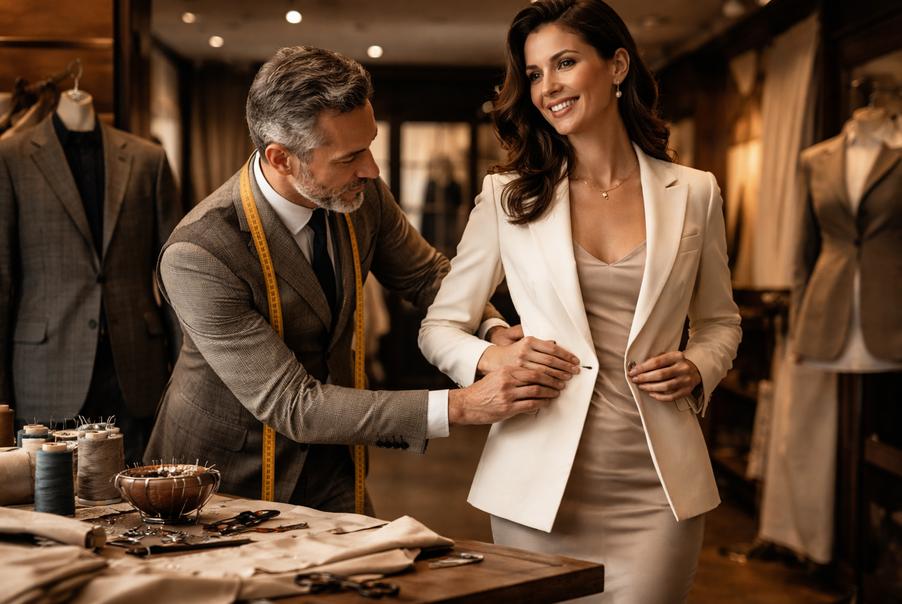 Clothing has an uncanny ability to either elevate a person or quietly sabotage them, and the deciding factor is rarely the label stitched inside. It is fit. Not the trend of the season, not the colour everyone suddenly agrees is "in," and certainly not the price tag that demands respect. A well-fitted outfit can make an ordinary garment look exceptional, while a poorly fitted designer piece can resemble an expensive misunderstanding.
Formalwear, in particular, leaves little room for error. Unlike casual clothing, which can rely on relaxed silhouettes and forgiving fabrics, formal attire is expected to follow the body with intention. When it does, the result is confidence. When it doesn't, the result is constant fidgeting, awkward tugging, and the quiet hope that nobody notices the sleeves that seem to have ambitions of their own.
Why Fit Always Wins Over Trend
Fashion trends are fleeting by design. One year celebrates oversized tailoring, the next demands structure and precision. Trying to keep up can feel like chasing a moving target while wearing shoes that don't quite fit—because, quite often, that is exactly what is happening.Fit, on the other hand, is timeless. A jacket that sits correctly on the shoulders, trousers that break just right at the shoe, or a dress that follows the natural lines of the body will always look polished. These elements do not expire with the season. They quietly outperform whatever trend happens to be making headlines.
There is also a practical advantage. Investing in garments that fit well means they can be worn repeatedly without looking dated. Trends might earn compliments for a moment, but good tailoring earns respect every time.
Understanding Your Shape Before the Stitching Begins
Tailoring begins with observation, not alteration. Understanding body shape is essential to achieving a flattering fit, and it is surprisingly overlooked. Many people assume tailoring is about making something tighter or shorter, when in reality it is about proportion and balance.For example, someone with broader shoulders may benefit from garments that create a clean vertical line, while a more petite frame often requires adjustments that prevent fabric from overwhelming the silhouette. Ignoring these considerations leads to garments that technically "fit" but visually fall short.
It is also worth noting that sizing labels are not a reliable guide. Two garments with the same size can behave very differently depending on the cut. This is why trying things on—and being honest about how they sit—is far more valuable than trusting a number on a tag.
Common Fit Mistakes That Quietly Ruin Everything
Some fit issues are so common they almost go unnoticed, yet they can undermine an otherwise excellent outfit. A few of the usual suspects include:- Shoulders that extend beyond the natural line, creating a drooping effect
- Sleeves that either swallow the hands or hover awkwardly above the wrist
- Trousers that bunch excessively or fail to meet the shoe properly
- Dresses that pull in some areas while hanging loosely in others
Fixing these issues is rarely dramatic. Often, a slight adjustment at the hem or a small refinement at the waist can transform the entire look. It is less about reinvention and more about precision.
The Quiet Power of Alterations
Alterations are often treated as an optional extra, something reserved for perfectionists or those with an unusual fit. In reality, they are the difference between clothing that merely covers and clothing that works. Even well-made garments are designed for general proportions, not individual bodies, and expecting them to fit perfectly straight off the hanger is optimistic at best.A skilled tailor does not simply adjust measurements; they refine how a garment interacts with movement and posture. Taking in a waist can create structure, shortening sleeves can restore balance, and adjusting a hem can completely change how an outfit is perceived. These are subtle changes, yet their impact is immediate.
There is also a psychological shift. Wearing something that fits properly removes distraction. Instead of constantly adjusting fabric or second-guessing appearance, attention can move to the occasion itself. That alone is worth the effort.
Fabric, Structure, and the Illusion of Effortlessness
Fit is not achieved through measurements alone. Fabric plays a significant role in how a garment behaves, and certain materials are far more forgiving than others. Structured fabrics tend to hold their shape, offering a crisp and defined silhouette, while softer materials can drape unpredictably if not carefully tailored.This is where many formalwear decisions go astray. A beautiful fabric can lose its appeal if it clings in the wrong places or collapses where structure is needed. Conversely, a simpler material can look refined when it is cut and fitted with precision.
The goal is an appearance of ease, even though it is anything but accidental. When fit and fabric work together, the result looks natural, as though the garment simply belongs. Achieving that effect often involves more thought than most people expect, but the payoff is undeniable.
When to Tailor and When to Walk Away
Not every garment is worth altering, and recognising this can save both time and frustration. If the shoulders of a jacket are significantly off, or the overall proportions feel fundamentally wrong, tailoring may not be the best solution. Some issues require more reconstruction than refinement.On the other hand, garments that are close to fitting well are ideal candidates for alteration. Minor adjustments can bring them into alignment with the body, transforming them into reliable pieces for formal occasions. The key is knowing the difference between a small tweak and a structural overhaul.
Trying to force an unsuitable garment into place often leads to disappointing results. It is the sartorial equivalent of insisting a square peg will eventually cooperate if given enough encouragement.
Tailored Thinking Leaves a Lasting Impression
Style does not demand constant reinvention. It rewards consistency, awareness, and a willingness to prioritise what actually works. Tailoring supports all three, offering a way to refine clothing so it reflects the person wearing it rather than competing with them.A well-fitted outfit communicates attention to detail without needing explanation. It suggests care, preparation, and an understanding of proportion. None of these qualities rely on trends, and none of them fade with time.
Formalwear will always carry expectations, but meeting them does not require chasing every new direction. It requires focus. When garments fit as they should, everything else becomes simpler. Even the mirror seems a little more agreeable, which is perhaps the most convincing argument of all.
Article kindly provided by therosewardrobeonline.co.uk
Latest Articles
- Why Mixing Photography Styles Can Produce a More Interesting Record of an Event
- How to Photograph a Room Without Making It Look Bigger Than It Really Is
- Why Layering a Scene Creates Wedding Photographs That Feel More Immersive
- The Quiet Design Details That Make Wedding Memories Feel More Personal
- The Psychology of Ceiling Height: How Vertical Space Changes the Way We Feel
- The Hidden Power of Product Demonstrations: Why Showing Beats Telling
- Beyond Family Portraits: Unexpected Photos That Make Stunning Wall Art
- Designing for Trust: The Hidden Visual Signals That Shape First Impressions
- Why Banner Design Is Still One of the Most Effective Local Marketing Tools
- Designing for Impatient People, and Why That's a Good Thing
- Borrowing Film Planning Techniques for Better Graphic and Web Design
- Designing with Light Instead of Filters: How Atmosphere Shapes a Photograph
- The Scent Wardrobe Principle: Designing Your Fragrance Collection Like an Interior Space
- How Small Visual Details Change the Entire Mood of an Image
- Turning Everyday Lighting Into a Design Feature
- Designing Photo Albums That People Actually Revisit
- Designing Illusions: How Sliding Wardrobe Doors Can Visually Reshape a Room
- Fit Over Fashion Why Tailoring Matters More Than Trends for Formalwear
- Why Fast Websites Matter More Than Beautiful Ones When People Are Choosing Where to Eat
- When Product Photos Quietly Sabotage Online Sales
- Architecture
- Graphic Design
- Web Design
- Industrial Design
- Interior Design
- Fashion Design
- Photography
- Product Design
- UI/UX Design
- Landscape Design
- Animation
- Industrial Engineering
- Packaging Design
- Branding and Identity Design
- Exhibit Design
- Advertising Design
- Typography
- Motion Graphics
- Sustainable Design
- User Research
- Fashion Merchandising
- Film and Video Production
- UX Writing
- Environmental Design
- Print Design
- Interaction Design
- Art Direction
- Textile Design
- Game Design
- Virtual Reality (VR) Design
- General Design Principles
- Event and Wedding Design