

When a Wedding Day Quietly Becomes Its Own Photographer
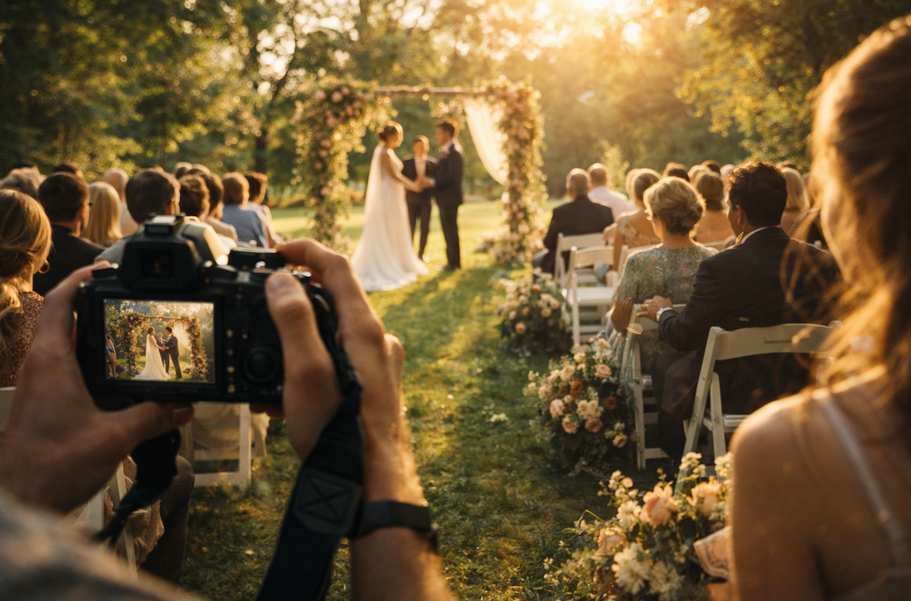 A wedding camera cannot invent moments that never happen. It can only catch what unfolds. That simple truth is the secret behind wedding days that produce photographs full of life rather than stiff smiles and politely arranged elbows.
When a celebration is planned with flow, breathing room, and thoughtful spaces, the photos tend to take care of themselves. People interact naturally. Laughter sneaks in. Someone's aunt wipes away a tear while pretending she isn't. Those are the images that survive long after the cake has been eaten and the playlist has been forgotten.
The trick is not better posing. It is designing a day where real moments occur without anyone needing to say, "Okay, everyone act natural."
Space in the Schedule Creates Real Moments
One of the biggest enemies of natural photography is a schedule that moves faster than a caffeinated squirrel.When every part of the day is squeezed tightly together, people rush. Conversations end abruptly. Guests scramble between locations. Photographers end up chasing events instead of quietly observing them.
A better timeline gives the day room to breathe.
- Allow generous preparation time in the morning.
- Leave gaps between ceremony and reception activities.
- Resist scheduling every minute with planned entertainment.
None of these moments can be scheduled, but they happen easily when the day is not sprinting toward the next checkpoint.
Light Does Half the Work
Good light is the quiet hero of effortless wedding photography. It does not require instructions, poses, or a ten-minute lecture about chin angles.Natural light instantly makes images softer, more dimensional, and more relaxed. Rooms with windows, outdoor ceremonies, and shaded garden areas create a setting where people look comfortable rather than interrogated by overhead lighting.
Choosing spaces with natural light also removes pressure from everyone involved. When lighting works naturally, guests can move freely, conversations happen without interruption, and the photographer is not forced to assemble lighting equipment that resembles a small science experiment.
Even simple adjustments help:
- Getting ready near large windows.
- Planning ceremonies earlier in the day when sunlight is softer.
- Holding cocktail hour outdoors if possible.
Room Layout Shapes Interaction
People behave differently depending on how a space is arranged. A long banquet table encourages conversation. A scattered set of small tables can make guests feel isolated. A ceremony aisle that feels like a runway tends to make people walk it like one.Layouts influence how guests move, gather, and interact. Those interactions become the heart of event photography.
Thoughtful placement encourages natural connections. Guests positioned closer together talk more. Family members seated nearby share reactions during the ceremony. Couples entering a reception through the middle of the room are surrounded by cheers rather than polite clapping from across the hall.
None of this requires elaborate design. It simply means thinking about how people will occupy the space once the music starts and the formalities begin.
A wedding that feels comfortable for guests becomes incredibly easy to photograph. Real expressions appear everywhere, and no one needs to be reminded to smile.
Ceremony Design That Encourages Genuine Reactions
Ceremonies often produce the most emotional photographs of the entire day, yet they are sometimes planned like a formal stage production. Long distances between guests and the couple, rigid seating arrangements, and overly structured entrances can make the moment feel strangely distant.A ceremony works beautifully on camera when people feel close to the moment rather than watching it from afar.
Bringing seating closer together creates intimacy. Guests see expressions clearly. They notice when someone's voice shakes slightly during vows. Reactions ripple through the crowd instead of disappearing into the back row.
Shorter aisles also help. While dramatic entrances can be appealing in theory, extremely long walks often produce the facial expression of someone who suddenly realizes hundreds of people are watching them walk very slowly.
Ceremonies designed with closeness in mind often lead to the most memorable images. When people feel part of the moment, their reactions are immediate and honest.
Let Guests Be Guests
Nothing interrupts natural photographs faster than turning every guest into a part-time stage extra.Guests should not feel like they are participating in a production where every movement is directed. The more instructions people receive, the more self-aware they become. Once that happens, spontaneity disappears.
Simple planning choices allow guests to relax:
- A cocktail hour with comfortable seating and open space.
- Music that encourages conversation instead of drowning it out.
- Activities that feel optional rather than mandatory.
These are the photographs that feel alive.
Gentle Structure Beats Constant Direction
A well-designed wedding day provides structure without controlling every detail. Key moments still exist: the ceremony, the first dance, the speeches. Those anchors guide the flow of the celebration.Between those moments, however, the day should unfold freely.
Photographers thrive in this environment. Instead of repeatedly arranging people into poses, they can observe quietly and anticipate interactions before they happen. The result is a collection of images that feel connected rather than staged.
Couples often worry that fewer posed photos means missing important family images. In reality, a short, efficient portrait session usually covers those needs perfectly. Ten focused minutes often accomplish more than thirty minutes of polite smiling while relatives wonder when the appetizers will appear.
Structure creates reliability. Freedom creates personality. A balance between the two produces photographs that feel authentic.
A Picture Perfect Ending
When a wedding day is designed with natural flow, thoughtful spaces, and breathing room, photography becomes surprisingly simple.Moments appear on their own. Friends reconnect, parents grow emotional, and someone inevitably attempts dance moves that will be discussed at future family gatherings for many years.
None of those things can be staged convincingly. They happen when people feel comfortable enough to forget the camera exists.
Plan the day so guests can relax, light can do its quiet work, and conversations can wander wherever they please. When that happens, the camera does not need to chase moments.
They walk right into the frame.
Article kindly provided by emmawinslet.com
Latest Articles
- Why a Simple Home Redesign Can Become a Plumbing Engineering Project
- Why Mixing Photography Styles Can Produce a More Interesting Record of an Event
- How to Photograph a Room Without Making It Look Bigger Than It Really Is
- Why Layering a Scene Creates Wedding Photographs That Feel More Immersive
- The Quiet Design Details That Make Wedding Memories Feel More Personal
- The Psychology of Ceiling Height: How Vertical Space Changes the Way We Feel
- The Hidden Power of Product Demonstrations: Why Showing Beats Telling
- Beyond Family Portraits: Unexpected Photos That Make Stunning Wall Art
- Designing for Trust: The Hidden Visual Signals That Shape First Impressions
- Why Banner Design Is Still One of the Most Effective Local Marketing Tools
- Designing for Impatient People, and Why That's a Good Thing
- Borrowing Film Planning Techniques for Better Graphic and Web Design
- Designing with Light Instead of Filters: How Atmosphere Shapes a Photograph
- The Scent Wardrobe Principle: Designing Your Fragrance Collection Like an Interior Space
- How Small Visual Details Change the Entire Mood of an Image
- Turning Everyday Lighting Into a Design Feature
- Designing Photo Albums That People Actually Revisit
- Designing Illusions: How Sliding Wardrobe Doors Can Visually Reshape a Room
- Fit Over Fashion Why Tailoring Matters More Than Trends for Formalwear
- Why Fast Websites Matter More Than Beautiful Ones When People Are Choosing Where to Eat
- Architecture
- Graphic Design
- Web Design
- Industrial Design
- Interior Design
- Fashion Design
- Photography
- Product Design
- UI/UX Design
- Landscape Design
- Animation
- Industrial Engineering
- Packaging Design
- Branding and Identity Design
- Exhibit Design
- Advertising Design
- Typography
- Motion Graphics
- Sustainable Design
- User Research
- Fashion Merchandising
- Film and Video Production
- UX Writing
- Environmental Design
- Print Design
- Interaction Design
- Art Direction
- Textile Design
- Game Design
- Virtual Reality (VR) Design
- General Design Principles
- Event and Wedding Design