

Borrowing Film Planning Techniques for Better Graphic and Web Design
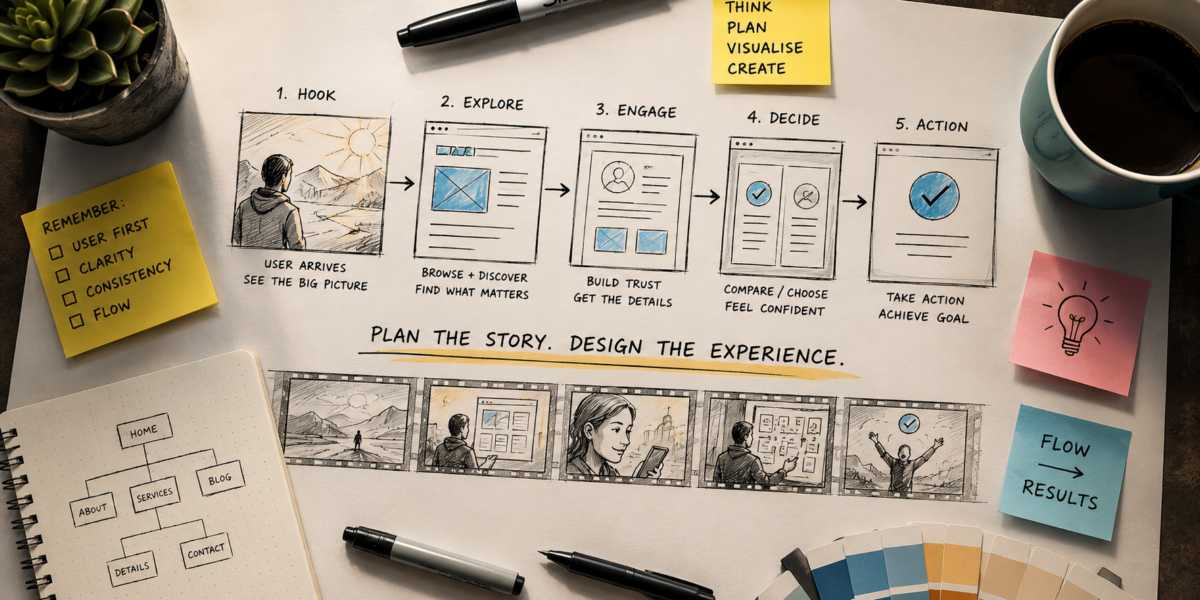 Design projects rarely fail because somebody lacked talent. They stumble because ideas begin sprinting before anyone checks whether they are wearing the right shoes. A website homepage appears before the navigation is understood. A campaign launches with polished graphics that somehow communicate three different moods and a mild identity crisis. Somewhere in the middle sits a designer quietly wondering how everyone arrived at this chaos so quickly.
Film production solved a version of this problem long ago through storyboarding. Before expensive cameras roll or actors start practising meaningful stares into the middle distance, scenes are mapped out. Visual flow, pacing, transitions, and emotional direction are explored early. Graphic and web design can borrow this mindset with remarkable results.
More Than Sketches on a Wall
Storyboards are often mistaken for rough drawings created only for film crews armed with coffee and deadlines. The real value sits elsewhere. A storyboard is a thinking tool.In design, that means planning how someone experiences a piece of work before colours, typography, or polished visuals enter the room demanding attention.
For web designers, storyboard thinking creates a structured view of user journeys. Instead of designing pages as isolated pieces, the designer maps movement and intent. Where does the user arrive? What are they trying to achieve? What emotional state are they likely in? Are they curious, cautious, confused, impatient, or simply trying to find the price without being forced through a digital obstacle course?
For graphic designers, it helps connect individual assets into a coherent sequence. A poster, landing page, social post, brochure, and email should not feel like cousins who met once at a wedding. They should share rhythm, visual priorities, and a clear sense of purpose. Storyboarding gives those pieces a reason to belong together.
Planning Movement Before Decoration
Design conversations often rush toward aesthetics because visuals are exciting. Fonts have personality. Colour palettes inspire debate worthy of diplomatic negotiations. Animations sparkle with possibility. Yet visual polish cannot rescue weak structure.A storyboard mindset reverses the order. It asks what needs to happen before asking what should look impressive.
Consider a website redesign. Without planning, teams may spend hours refining headers and button styles while ignoring the user's actual route through the site. The result looks expensive and behaves like a shopping trolley with one rebellious wheel.
Storyboarding encourages designers to break that process into sequences.
- Entry point and first impression
- Information hierarchy
- Decision moments
- Potential friction points
- Desired action or outcome
Campaign Design Without Guesswork
Campaign planning benefits particularly well from film-inspired thinking.Many campaigns struggle because assets are produced individually rather than as connected chapters. Social graphics are approved separately from landing pages. Emails develop their own tone. Video assets follow a slightly different direction. By launch day, the campaign looks less like a coordinated effort and more like several committees accidentally sharing a folder.
Storyboards provide a wider lens.
Instead of asking how each design performs alone, creatives examine how audiences move through the entire sequence. A social advert sparks curiosity. The landing page deepens understanding. Supporting visuals reinforce recognition. Calls to action feel like natural next steps rather than surprise pop quizzes.
This planning stage does not restrict creativity. It protects it.
Freelancers often feel pressure to produce finished visuals quickly to reassure clients that progress exists. Internal teams face similar pressure from deadlines and stakeholder enthusiasm. Yet fast production without direction usually creates extra revision cycles disguised as productivity.
A simple storyboard can prevent that spiral.
Even basic thumbnail sketches, wireframes, or flow diagrams provide valuable perspective. Nobody expects museum-worthy illustrations. The goal is clarity, not artistic heroics involving dramatic pencil flourishes and intense eye contact with the sketchbook.
When storyboard thinking becomes routine, design decisions gain stronger logic. Creative choices stop feeling random and begin supporting a planned experience from beginning to end.
Article kindly provided by videographymanchester.co.uk
Latest Articles
- Why Mixing Photography Styles Can Produce a More Interesting Record of an Event
- How to Photograph a Room Without Making It Look Bigger Than It Really Is
- Why Layering a Scene Creates Wedding Photographs That Feel More Immersive
- The Quiet Design Details That Make Wedding Memories Feel More Personal
- The Psychology of Ceiling Height: How Vertical Space Changes the Way We Feel
- The Hidden Power of Product Demonstrations: Why Showing Beats Telling
- Beyond Family Portraits: Unexpected Photos That Make Stunning Wall Art
- Designing for Trust: The Hidden Visual Signals That Shape First Impressions
- Why Banner Design Is Still One of the Most Effective Local Marketing Tools
- Designing for Impatient People, and Why That's a Good Thing
- Borrowing Film Planning Techniques for Better Graphic and Web Design
- Designing with Light Instead of Filters: How Atmosphere Shapes a Photograph
- The Scent Wardrobe Principle: Designing Your Fragrance Collection Like an Interior Space
- How Small Visual Details Change the Entire Mood of an Image
- Turning Everyday Lighting Into a Design Feature
- Designing Photo Albums That People Actually Revisit
- Designing Illusions: How Sliding Wardrobe Doors Can Visually Reshape a Room
- Fit Over Fashion Why Tailoring Matters More Than Trends for Formalwear
- Why Fast Websites Matter More Than Beautiful Ones When People Are Choosing Where to Eat
- When Product Photos Quietly Sabotage Online Sales
- Architecture
- Graphic Design
- Web Design
- Industrial Design
- Interior Design
- Fashion Design
- Photography
- Product Design
- UI/UX Design
- Landscape Design
- Animation
- Industrial Engineering
- Packaging Design
- Branding and Identity Design
- Exhibit Design
- Advertising Design
- Typography
- Motion Graphics
- Sustainable Design
- User Research
- Fashion Merchandising
- Film and Video Production
- UX Writing
- Environmental Design
- Print Design
- Interaction Design
- Art Direction
- Textile Design
- Game Design
- Virtual Reality (VR) Design
- General Design Principles
- Event and Wedding Design