

Why Banner Design Is Still One of the Most Effective Local Marketing Tools
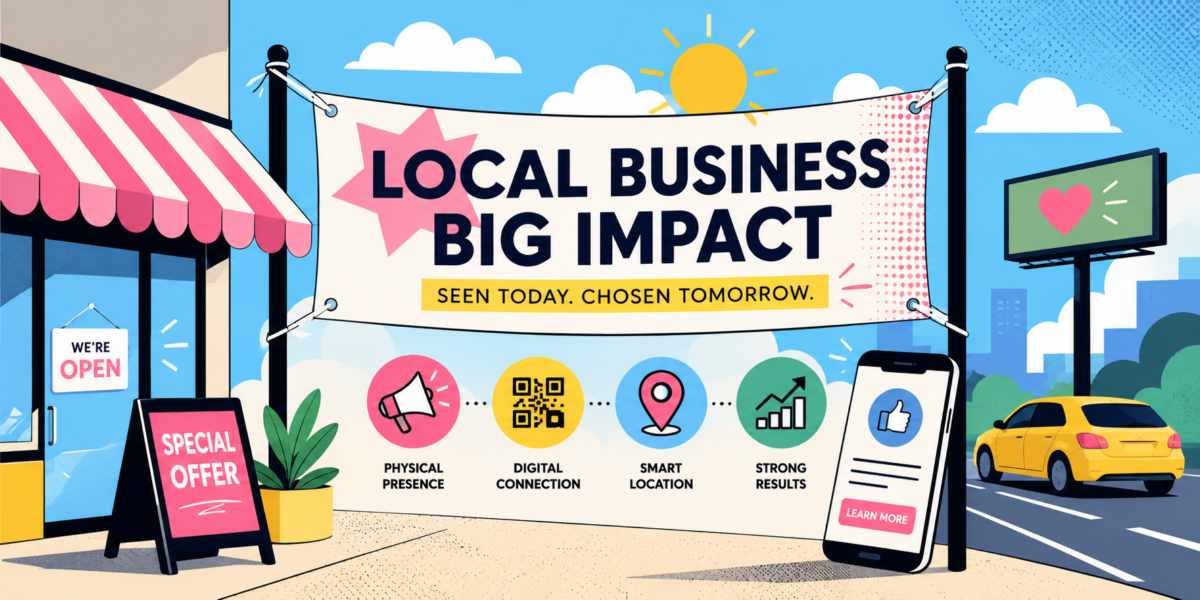 A sidewalk can become a salesperson if the banner above it knows what it is doing.
Local businesses spend plenty of time trying to be seen online, and rightly so. Search results, social posts, ads, and email campaigns all matter. But physical advertising still has one major advantage: it lives where customers already are. A banner outside a shop, beside a road, at a school event, or near a checkout counter does not need anyone to open an app, accept cookies, or remember a password they created in 2014.
The Enduring Power of Physical Advertising
Banner design remains effective because it turns ordinary space into brand space. A well-designed banner can announce a sale, promote a service, guide visitors, or simply remind people that a business exists. That reminder matters. Local buying decisions are often quick, practical, and based on visibility. Someone driving past may not need a new roof today, but after seeing the same roofing company banner three times, that name starts to stick.Good banner design also builds trust. A clean layout, readable text, sharp logo, and clear message suggest that a business pays attention to details. A messy banner, on the other hand, can make even a great company look like it designed its marketing during a power outage while arguing with a printer.
Physical banners also work because they are hard to ignore. Online ads can be skipped, blocked, muted, or mentally deleted in half a second. A strong banner at eye level has staying power. It does not chase people around the internet like an overly attached shoe ad. It simply stands there, doing its job.
Combining Banners With Digital Marketing Campaigns
The smartest businesses do not treat banners and digital marketing as separate worlds. They connect them. A banner can include a website, QR code, social handle, short offer, or campaign message that matches online ads. This creates a smooth path from street-level attention to digital action.For example, a restaurant might use a banner promoting a lunch special, then run the same offer on social media. A gym could display a banner for a free trial and send visitors to a landing page. A contractor could use a banner at a job site with a simple message like Need work like this? followed by a web address.
The key is consistency. Colors, fonts, wording, and offers should feel connected across every channel. When someone sees the banner outside and later sees the same business online, recognition increases. That is when marketing starts working like a team instead of a group project where only one person did the slides.
Best Locations for Maximum Exposure
Even the most impressive banner design can struggle if nobody sees it. Location often determines whether a banner becomes a valuable marketing asset or an expensive decoration.Storefronts remain one of the strongest placements available. People walking or driving by are already near the business, making them more likely to act. A banner promoting a sale, new service, or special event can influence decisions in real time. Unlike many forms of advertising, there is no delay between seeing the message and taking action.
Roadside locations can also deliver strong results when local regulations allow them. Drivers may only have a few seconds to absorb information, which makes clear design especially important. Short messages, large lettering, and strong contrast help ensure the banner can be understood without requiring anyone to slow down enough to create a traffic report.
Community events provide another valuable opportunity. Festivals, charity runs, school functions, trade shows, and local fairs attract audiences that are already engaged with the area. Businesses that display banners at these gatherings can strengthen their local presence while reaching potential customers in a positive setting.
Some effective banner locations include:
- Storefront entrances and windows
- Busy intersections and approved roadside spaces
- Sporting events and community festivals
- Trade show booths and exhibition halls
- Construction sites and project locations
- Parking lots and outdoor promotional areas
Design Trends Businesses Should Consider in 2026
Banner design continues to evolve, although the fundamentals remain unchanged. Clarity, readability, and strong branding still matter more than flashy effects.One noticeable trend is the move toward cleaner layouts. Businesses are reducing clutter and focusing on a single message rather than cramming every possible detail into one space. Simplicity often performs better because viewers can understand the message quickly.
Bold typography is also becoming increasingly important. Large, confident lettering helps banners remain effective from greater distances. When combined with strong contrast, it improves visibility in both indoor and outdoor settings.
QR codes continue to grow in popularity, particularly when paired with exclusive offers, appointment booking pages, menus, or promotional campaigns. They provide a direct bridge between physical advertising and digital engagement without adding unnecessary complexity.
Sustainability is another consideration for 2026. Many businesses are exploring environmentally conscious materials and production methods. Customers increasingly notice these choices, especially when they align with a company's broader values and branding efforts.
Personalization is also gaining ground. Rather than relying on generic messages, businesses are creating banners tailored to specific neighborhoods, events, and audiences. A banner that feels relevant to local customers often generates stronger engagement than one designed to appeal to everyone at once.
Making a Big Impression Without Waving Goodbye to Your Budget
Banner design remains one of the most practical and cost-effective marketing tools available to local businesses. It creates visibility, reinforces branding, supports digital campaigns, and reaches people where they live, work, and shop. While marketing technology continues to advance, the ability to place a clear message directly in front of potential customers remains remarkably powerful.A well-designed banner does not need algorithms, software updates, or a trending hashtag to earn attention. It simply needs the right message, the right design, and the right location. When those elements come together, a banner can continue generating awareness long after many digital ads have disappeared into the endless scroll.
Article kindly provided by easyorderbanners.com
Latest Articles
- Why Mixing Photography Styles Can Produce a More Interesting Record of an Event
- How to Photograph a Room Without Making It Look Bigger Than It Really Is
- Why Layering a Scene Creates Wedding Photographs That Feel More Immersive
- The Quiet Design Details That Make Wedding Memories Feel More Personal
- The Psychology of Ceiling Height: How Vertical Space Changes the Way We Feel
- The Hidden Power of Product Demonstrations: Why Showing Beats Telling
- Beyond Family Portraits: Unexpected Photos That Make Stunning Wall Art
- Designing for Trust: The Hidden Visual Signals That Shape First Impressions
- Why Banner Design Is Still One of the Most Effective Local Marketing Tools
- Designing for Impatient People, and Why That's a Good Thing
- Borrowing Film Planning Techniques for Better Graphic and Web Design
- Designing with Light Instead of Filters: How Atmosphere Shapes a Photograph
- The Scent Wardrobe Principle: Designing Your Fragrance Collection Like an Interior Space
- How Small Visual Details Change the Entire Mood of an Image
- Turning Everyday Lighting Into a Design Feature
- Designing Photo Albums That People Actually Revisit
- Designing Illusions: How Sliding Wardrobe Doors Can Visually Reshape a Room
- Fit Over Fashion Why Tailoring Matters More Than Trends for Formalwear
- Why Fast Websites Matter More Than Beautiful Ones When People Are Choosing Where to Eat
- When Product Photos Quietly Sabotage Online Sales
- Architecture
- Graphic Design
- Web Design
- Industrial Design
- Interior Design
- Fashion Design
- Photography
- Product Design
- UI/UX Design
- Landscape Design
- Animation
- Industrial Engineering
- Packaging Design
- Branding and Identity Design
- Exhibit Design
- Advertising Design
- Typography
- Motion Graphics
- Sustainable Design
- User Research
- Fashion Merchandising
- Film and Video Production
- UX Writing
- Environmental Design
- Print Design
- Interaction Design
- Art Direction
- Textile Design
- Game Design
- Virtual Reality (VR) Design
- General Design Principles
- Event and Wedding Design