

The Scent Wardrobe Principle: Designing Your Fragrance Collection Like an Interior Space
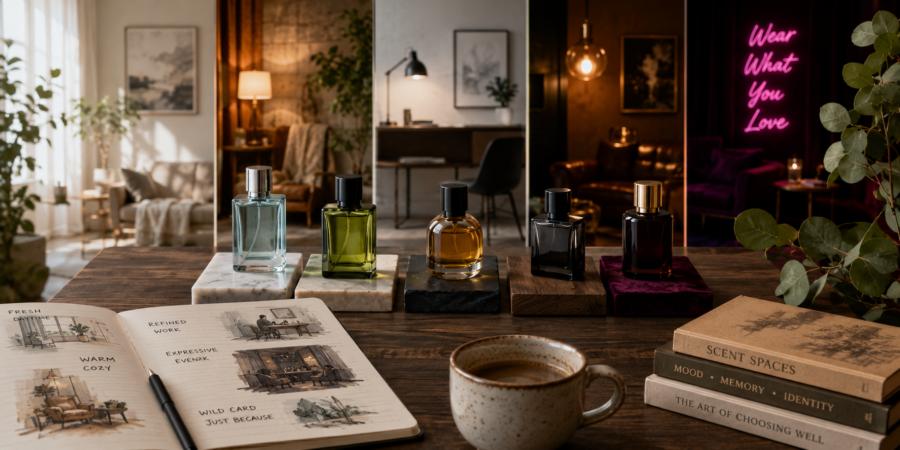 Sometimes a fragrance collection looks less like a thoughtful selection and more like a drawer that lost an argument with impulse shopping.
A bottle bought during winter optimism sits beside something chosen after a persuasive online review and a third acquired because the packaging looked like it belonged in a secret society. The result can be enjoyable, chaotic, and mildly confusing.
There is another way to think about fragrance ownership. Instead of chasing trends or hunting endlessly for a mythical "perfect" scent, consider building a fragrance wardrobe the same way an interior designer approaches a home. Rooms are not decorated identically. A bedroom serves a different purpose from a kitchen, and nobody installs nightclub lighting beside the cereal cupboard unless several unusual decisions have already been made.
Fragrance works much the same way.
Design Before Desire
Most well-designed interiors rely on balance rather than excess. Texture, atmosphere, colour, and purpose all work together to create cohesion. Fragrance collections benefit from similar thinking.A scent wardrobe becomes more intentional when each fragrance has a role instead of competing for permanent dominance.
Some fragrances feel airy and bright, almost like open windows and clean linen. Others have warmth and depth, resembling soft lighting, darker materials, or a room where people suddenly speak more slowly and order expensive coffee.
Rather than asking, "What fragrance is popular?" a more useful question is, "What mood or setting am I designing?"
This shift changes everything.
Building Scent Spaces
Interior spaces usually have anchors. Fragrance wardrobes need them too.A practical rotation often includes distinct categories:
- Fresh or clean scents for daytime and warmer weather
- Comforting or textured fragrances for cooler months
- Something refined for professional settings
- A more expressive scent reserved for evenings or social occasions
- An unexpected choice chosen purely for pleasure
Not every design decision requires justification. Sometimes a chair exists because it looks excellent near a window. Likewise, a fragrance may deserve space simply because it makes Tuesday feel less administrative.
Serious consideration should also be given to season and climate.
Heavy resinous scents can feel luxurious in winter yet overwhelming during humid weather. Fresh citrus or aromatic compositions often breathe more naturally in heat. Wearing the wrong fragrance for the environment is rather like placing a velvet armchair beside a swimming pool. Admirably committed, perhaps, but not entirely cooperative with reality.
Texture Matters More Than Trends
People often describe fragrance through notes alone, but texture may be the more revealing language.Interior designers understand this instinctively. A room filled entirely with polished surfaces can feel cold, while one layered with natural materials gains warmth and dimension. Fragrance creates similar effects.
Some scents feel crisp and transparent. Others seem creamy, powdery, smoky, metallic, or dry. These qualities shape emotional response long before anyone identifies specific ingredients.
A carefully designed fragrance wardrobe benefits from variety in texture.
Two citrus fragrances may smell entirely different in atmosphere. One might suggest bright cotton shirts and organised plans. Another may carry mineral or herbal edges that feel more architectural and restrained. Likewise, woody fragrances range from soft and comforting to stern enough to make one instinctively sit up straighter.
Texture adds personality to a collection and prevents everything from blending into a parade of expensive déjà vu.
Trends, meanwhile, deserve polite distance.
Popular fragrances can be excellent, but popularity alone rarely creates personal style. Interior spaces copied directly from catalogues often feel strangely anonymous. Fragrance behaves the same way. If every choice is driven by rankings and online excitement, the collection may become fashionable yet oddly disconnected from the person wearing it.
This is not an argument against trends. It is an argument for editing them.
Curating Rather Than Accumulating
A well-designed scent wardrobe is rarely enormous.More bottles do not automatically create more satisfaction. In fact, oversized collections sometimes produce the same feeling as overcrowded rooms: admiration mixed with faint exhaustion.
Curating requires restraint.
When considering a new fragrance, it helps to ask a few practical questions:
- Does this scent fill a role I currently lack?
- Does it introduce a new texture or mood?
- Would I still enjoy it six months from now?
- Am I buying the fragrance or merely adopting temporary excitement?
Many fragrance purchases begin with confidence and end with negotiations involving shelf space and mild regret. The bottle remains beautiful, naturally, but beauty alone does not guarantee regular wear.
Some paragraphs deserve seriousness because fragrance, despite its pleasure, intersects with identity and memory.
People often remember scent more vividly than visual detail. A fragrance can become tied to particular periods, routines, and emotional landscapes. Designing a wardrobe thoughtfully means recognising that these choices are not only decorative. They help shape how we experience our own lives and how certain moments are remembered later.
Scents and Sensibility
A compelling fragrance wardrobe does not demand perfection or endless acquisition. It asks for intention.Like a thoughtfully designed home, a meaningful collection reflects comfort, mood, function, and personality without needing constant renovation. Some bottles will energise, others will calm, and a few may remain gloriously impractical companions that make no logical sense whatsoever.
That is perfectly acceptable.
After all, personal style should smell lived in rather than staged.
Article kindly provided by fragrancesamplesuk.com
Latest Articles
- Why Mixing Photography Styles Can Produce a More Interesting Record of an Event
- How to Photograph a Room Without Making It Look Bigger Than It Really Is
- Why Layering a Scene Creates Wedding Photographs That Feel More Immersive
- The Quiet Design Details That Make Wedding Memories Feel More Personal
- The Psychology of Ceiling Height: How Vertical Space Changes the Way We Feel
- The Hidden Power of Product Demonstrations: Why Showing Beats Telling
- Beyond Family Portraits: Unexpected Photos That Make Stunning Wall Art
- Designing for Trust: The Hidden Visual Signals That Shape First Impressions
- Why Banner Design Is Still One of the Most Effective Local Marketing Tools
- Designing for Impatient People, and Why That's a Good Thing
- Borrowing Film Planning Techniques for Better Graphic and Web Design
- Designing with Light Instead of Filters: How Atmosphere Shapes a Photograph
- The Scent Wardrobe Principle: Designing Your Fragrance Collection Like an Interior Space
- How Small Visual Details Change the Entire Mood of an Image
- Turning Everyday Lighting Into a Design Feature
- Designing Photo Albums That People Actually Revisit
- Designing Illusions: How Sliding Wardrobe Doors Can Visually Reshape a Room
- Fit Over Fashion Why Tailoring Matters More Than Trends for Formalwear
- Why Fast Websites Matter More Than Beautiful Ones When People Are Choosing Where to Eat
- When Product Photos Quietly Sabotage Online Sales
- Architecture
- Graphic Design
- Web Design
- Industrial Design
- Interior Design
- Fashion Design
- Photography
- Product Design
- UI/UX Design
- Landscape Design
- Animation
- Industrial Engineering
- Packaging Design
- Branding and Identity Design
- Exhibit Design
- Advertising Design
- Typography
- Motion Graphics
- Sustainable Design
- User Research
- Fashion Merchandising
- Film and Video Production
- UX Writing
- Environmental Design
- Print Design
- Interaction Design
- Art Direction
- Textile Design
- Game Design
- Virtual Reality (VR) Design
- General Design Principles
- Event and Wedding Design