

How Painted Skies Transform the Atmosphere of a Room
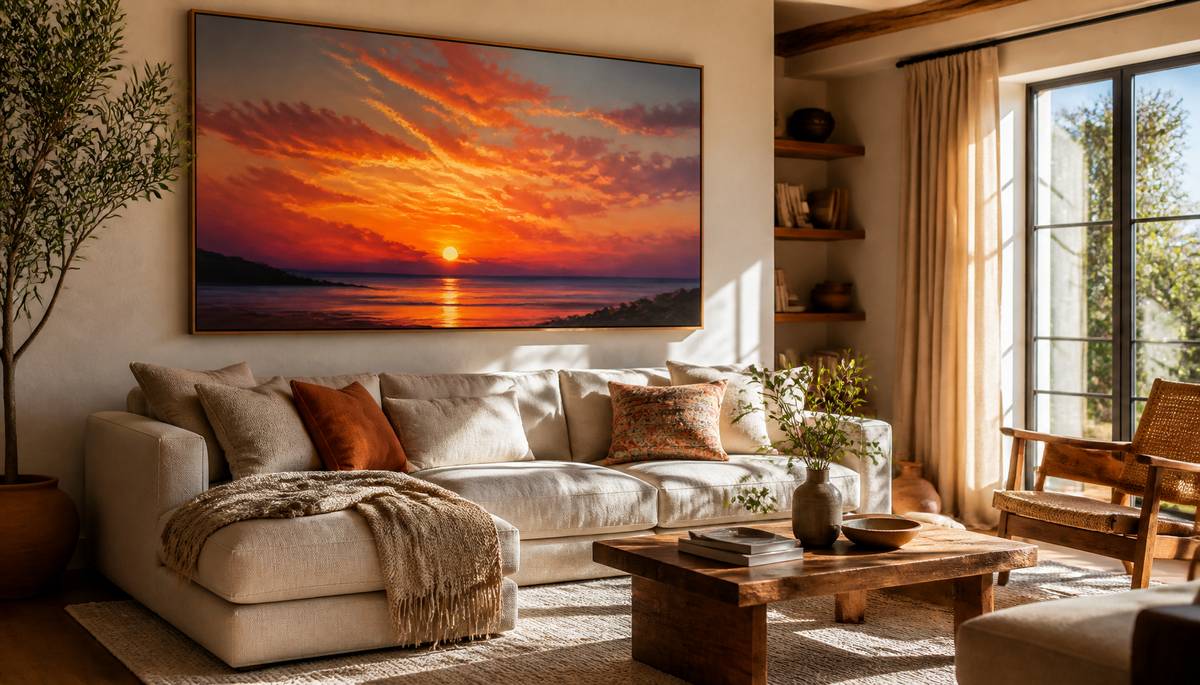 A grey sofa has never looked out of the window and wished it were somewhere else, but its owner probably has. Rooms can feel strangely lifeless even when the furniture is expensive, the walls are freshly painted and the cushions have been arranged with military precision. Sometimes, what's missing isn't another decorative accessory. It's a little atmosphere, preferably borrowed from the sky.
Paintings featuring skies can dramatically influence how we experience interior spaces. A fiery sunset introduces warmth and energy, while a pale blue horizon suggests openness and tranquillity. Dark storm clouds create tension and drama, and soft morning light can make an ordinary bedroom feel like somewhere worth waking up in.
The interesting thing is that none of these effects requires changing the actual room. A painting cannot move a wall, raise a ceiling or persuade your neighbour to stop using his leaf blower. Yet it can alter how spacious, comfortable or emotionally engaging a room feels.
Why Our Brains Respond to Painted Skies
Human beings have spent most of their existence observing the sky. Its colours provide information about weather, daylight, seasonal changes and the passage of time. Even indoors, we retain associations between particular atmospheric conditions and emotional experiences.Blue skies often suggest clarity, freedom and stability. Warm orange and pink sunsets can evoke relaxation, nostalgia or excitement. Heavy grey clouds may communicate seriousness, mystery or anticipation.
These associations aren't universal, and personal experience matters enormously. Someone who loves thunderstorms might find a painting of dark clouds exhilarating, while another person associates the same scene with cancelled holidays and damp socks.
Nevertheless, sky-inspired artwork offers interior designers a particularly effective way to introduce emotional character without relying entirely on furniture, wallpaper or architectural changes.
Sunset Paintings Can Warm Up a Cold Interior
Rooms dominated by white, grey or cool neutral colours sometimes feel slightly clinical. This can be desirable in certain contemporary interiors, but there's a fine line between sophisticated minimalism and a dentist's waiting room.A painting featuring a vivid sunset can introduce warmth without requiring a complete redesign. Rich oranges, dusty pinks, golden yellows and deep reds provide visual contrast against cooler surroundings.
The effect becomes especially interesting when the artwork contains several related colours. A sunset painting might combine warm peach clouds with a violet horizon and dark blue foreground. These combinations create opportunities to introduce complementary colours through cushions, ceramics or smaller decorative objects.
However, restraint is important. A spectacular orange sunset doesn't mean every accessory must suddenly resemble a traffic cone. Allow the painting to provide the dominant colour statement while the surrounding furnishings remain relatively understated.
Soft Horizons and the Illusion of Space
Small rooms frequently benefit from artwork that suggests distance. Paintings featuring expansive skies, distant coastlines or gently fading horizons can create a sense of visual depth beyond the physical boundaries of a wall.This works partly because our eyes interpret changes in colour, detail and contrast as indications of distance. Pale blues, muted greys and softly blended atmospheric tones can suggest an environment extending far beyond the picture frame.
A landscape painting with a low horizon is particularly effective because the sky occupies most of the composition. The result can feel wonderfully open, even when the actual room is barely large enough to accommodate a sofa and someone's ambitious collection of houseplants.
Stormy Skies Bring Drama Without the Bad Weather
Not every room needs to feel peaceful. Sometimes, a little visual drama can transform an otherwise predictable interior into something genuinely memorable.Paintings featuring storm clouds, turbulent skies and dramatic contrasts between light and darkness can create a powerful focal point. Deep charcoal greys, midnight blues and flashes of brilliant white introduce intensity, particularly when displayed against lighter walls.
Such artwork works especially well in dining rooms, studies and contemporary living spaces where a stronger visual personality is welcome. A dramatic sky painting above a fireplace, for example, can command attention without requiring elaborate decorative surroundings.
The secret is balance. Too many competing dramatic elements can make a room feel exhausting. One thunderstorm on the wall is atmospheric. Five thunderstorms, black furniture and blood-red curtains might suggest the household is preparing to summon something.
Natural Light Changes Everything
One frequently overlooked consideration when choosing sky-inspired artwork is how the painting interacts with natural daylight.A painting featuring delicate pink clouds might appear beautifully luminous in a bright, south-facing room but considerably more subdued in a darker interior. Similarly, deep blue skies can look rich and inviting under warm artificial lighting while appearing cooler under strong daylight.
The direction of windows, surrounding wall colours and time of day all influence how artwork is perceived. Even the finish of the painting matters, since glossy surfaces can produce distracting reflections.
Before deciding where to hang a painting, observe the intended wall throughout the day. Consider whether direct sunlight creates glare and whether evening lighting preserves the artwork's intended atmosphere. Prolonged direct sunlight can also damage certain pigments and materials, making careful positioning important for preservation.
Choosing a Sky That Suits the Room
Different rooms serve different purposes, and their artwork should ideally support those activities rather than compete with them.Bedrooms often benefit from gentle horizons, muted twilight colours and softly illuminated clouds. These compositions can encourage a restful atmosphere without making the space feel visually empty.
Living rooms offer greater flexibility. A colourful sunset can introduce warmth and sociability, while an expansive blue sky creates a feeling of freshness and openness.
Home offices present an interesting opportunity. Clear skies and distant horizons may provide a welcome visual break from computer screens, particularly in rooms where the only actual view is a brick wall or the neighbour's satellite dish.
Ultimately, personal preference matters more than rigid decorating rules. A painting that genuinely interests its owner is likely to remain satisfying long after fashionable colour schemes have disappeared.
Every Room Deserves a Little Blue-Sky Thinking
Sky-inspired artwork demonstrates how profoundly colour, composition and atmosphere can influence interior design. A painting doesn't simply occupy empty wall space; it introduces an imagined environment that changes our perception of the room around it.Whether it's the warmth of a sunset, the openness of a pale horizon or the intensity of approaching storm clouds, the right artwork can give an ordinary interior a distinctive emotional identity.
And unlike the real sky, a painted one offers a considerable advantage. You can choose precisely what the weather looks like, every single day, without consulting a forecast or remembering where you left your umbrella.
Article kindly provided by moriahs.com
Latest Articles
- How Painted Skies Transform the Atmosphere of a Room
- Why a Simple Home Redesign Can Become a Plumbing Engineering Project
- Why Mixing Photography Styles Can Produce a More Interesting Record of an Event
- How to Photograph a Room Without Making It Look Bigger Than It Really Is
- Why Layering a Scene Creates Wedding Photographs That Feel More Immersive
- The Quiet Design Details That Make Wedding Memories Feel More Personal
- The Psychology of Ceiling Height: How Vertical Space Changes the Way We Feel
- The Hidden Power of Product Demonstrations: Why Showing Beats Telling
- Beyond Family Portraits: Unexpected Photos That Make Stunning Wall Art
- Designing for Trust: The Hidden Visual Signals That Shape First Impressions
- Why Banner Design Is Still One of the Most Effective Local Marketing Tools
- Designing for Impatient People, and Why That's a Good Thing
- Borrowing Film Planning Techniques for Better Graphic and Web Design
- Designing with Light Instead of Filters: How Atmosphere Shapes a Photograph
- The Scent Wardrobe Principle: Designing Your Fragrance Collection Like an Interior Space
- How Small Visual Details Change the Entire Mood of an Image
- Turning Everyday Lighting Into a Design Feature
- Designing Photo Albums That People Actually Revisit
- Designing Illusions: How Sliding Wardrobe Doors Can Visually Reshape a Room
- Fit Over Fashion Why Tailoring Matters More Than Trends for Formalwear
- Architecture
- Graphic Design
- Web Design
- Industrial Design
- Interior Design
- Fashion Design
- Photography
- Product Design
- UI/UX Design
- Landscape Design
- Animation
- Industrial Engineering
- Packaging Design
- Branding and Identity Design
- Exhibit Design
- Advertising Design
- Typography
- Motion Graphics
- Sustainable Design
- User Research
- Fashion Merchandising
- Film and Video Production
- UX Writing
- Environmental Design
- Print Design
- Interaction Design
- Art Direction
- Textile Design
- Game Design
- Virtual Reality (VR) Design
- General Design Principles
- Event and Wedding Design