

Why Layering a Scene Creates Wedding Photographs That Feel More Immersive
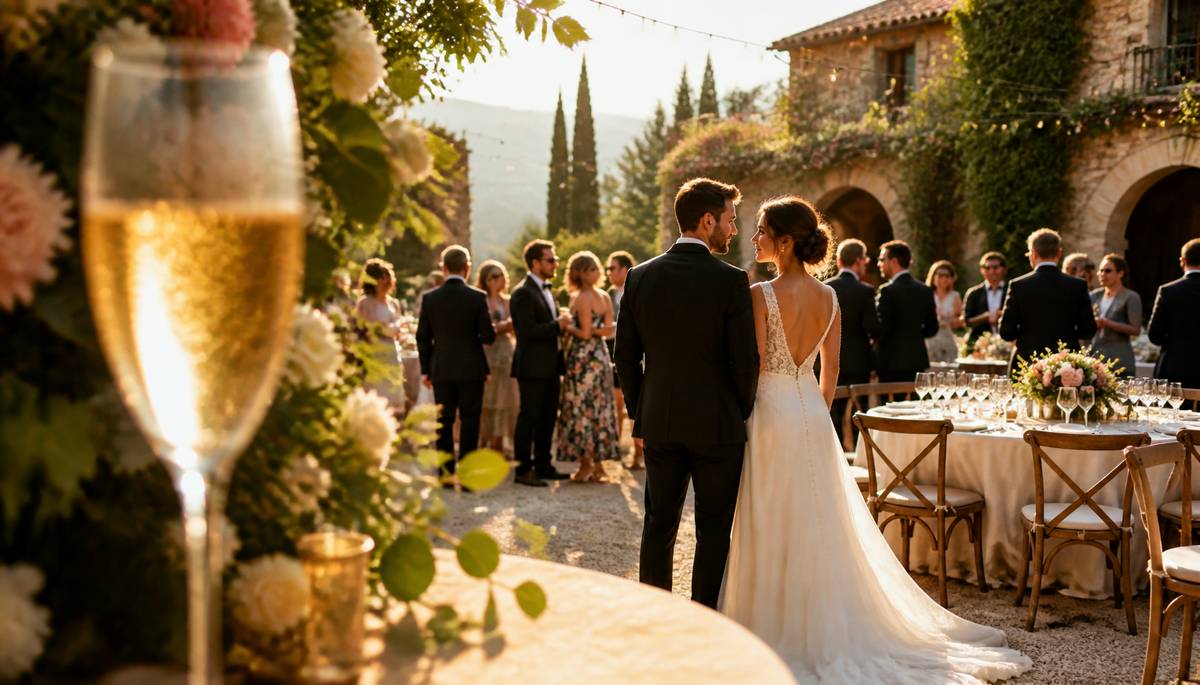 A champagne glass catches the light at the edge of the frame while, several metres beyond it, a newly married couple shares a quiet glance and guests drift between tables in the distance. Nothing in the photograph is accidental, yet it feels as though the viewer has simply stepped into the celebration at exactly the right moment.
Layering gives wedding photographs this sense of presence. Rather than placing every important subject on a single flat plane, the photographer builds the image through foreground, midground and background elements. Each area contributes something different, allowing the photograph to communicate atmosphere, location and human connection all at once.
Giving the Viewer Somewhere to Stand
The foreground acts as an entrance into the photograph. It might contain flowers, foliage, a doorway, the shoulder of a guest or the soft blur of a table decoration. These elements create the feeling that the viewer is observing the scene from within the wedding rather than looking at it from a safe distance through a catalogue window.Foreground objects do not always need to be sharp. A blurred arrangement of flowers can frame the couple without competing for attention, while leaves or architectural details can conceal distracting areas around the edge of the image. Even a passing waiter can become useful, although this depends heavily on whether the waiter is carrying champagne or an alarming tower of dirty plates.
The key is intention. A foreground element should guide the eye, establish intimacy or provide visual structure. If it blocks the bride’s face, slices through someone’s head or resembles a mysterious brown cloud, it may be contributing rather more drama than the photographer intended.
Letting the Midground Carry the Moment
The midground usually contains the photograph’s main subject. This could be the couple exchanging vows, a parent reacting during a speech or friends laughing during the reception. Because the foreground has already created an entry point, the central action feels embedded within a real environment rather than isolated from it.Careful positioning is essential here. The photographer may move slightly to place the couple between two foreground shapes, avoid visual overlaps or ensure that nearby guests support rather than interrupt the story. A difference of half a metre can turn a confused collection of heads, chairs and elbows into a balanced scene with a clear emotional centre.
Layering therefore requires patience as much as technical knowledge. Weddings rarely arrange themselves politely for the camera, and guests remain stubbornly unwilling to stand according to compositional theory.
Using the Background to Complete the Story
The background often receives less attention than it deserves, yet it quietly provides context that transforms a pleasant photograph into one that feels rooted in a specific place and time. A historic manor, a colourful garden, rows of glowing candles or relatives chatting between themselves all add information that helps explain the atmosphere without requiring a single caption.This does not mean every background should be packed with activity. The strongest backgrounds support the main subject rather than compete with it. A photographer constantly evaluates what belongs in the frame and what needs to disappear behind a slight change of angle. Sometimes taking two steps sideways removes a distracting exit sign, while crouching slightly replaces a row of parked cars with mature trees. Those few seconds of movement often save far more editing time later.
Background details can also reward viewers who spend longer studying the image. Someone might first notice the couple embracing, then spot grandparents smiling behind them or children inventing games that were never officially approved by the wedding planner. These smaller discoveries encourage people to revisit the photograph instead of absorbing everything in a single glance.
Depth Without Creating Visual Chaos
Layering should never become an excuse to include everything within eyesight. A photograph containing dozens of competing subjects quickly loses its emotional focus. Every layer needs a purpose, whether it introduces the scene, supports the main action or reinforces the location.Photographers often simplify complex scenes by paying attention to spacing between people. Small adjustments allow faces to remain visible while avoiding awkward overlaps. The result feels natural because everyone occupies their own visual space, making the image easier to understand without appearing carefully arranged.
Lens choice also plays an important role. Wider focal lengths naturally emphasise depth by exaggerating the distance between foreground and background, while longer lenses compress those distances. Neither approach is universally better. Instead, each offers different storytelling opportunities depending on the venue, available space and the moment unfolding in front of the camera.
A thoughtful photographer also considers light across every layer. If the foreground sits in heavy shadow while the couple stands in bright sunlight and the background is dazzlingly bright, the image can become difficult to read. Balancing these areas helps maintain harmony throughout the frame, allowing attention to settle naturally on the people who matter most.
Building Stories One Layer at a Time
Wedding photography is ultimately about preserving experiences rather than simply recording appearances. Layering allows each image to contain multiple conversations at once. The couple remains the heart of the photograph, while family, friends, architecture and carefully chosen surroundings quietly enrich the narrative without overwhelming it.When foreground, midground and background work together, viewers experience more than a beautifully posed portrait. They gain a sense of standing inside the celebration, noticing the expressions, relationships and tiny details that might otherwise have been forgotten. Depth becomes more than a visual technique; it becomes a way of preserving memory with greater honesty and richness.
Picture This Depth of Feeling
Many memorable wedding photographs succeed not because they contain spectacular scenery or elaborate staging, but because every layer contributes something meaningful. The foreground welcomes the eye, the midground delivers the emotional heartbeat and the background quietly reminds everyone where the story unfolded. Blend those elements with care and restraint, and the final image feels wonderfully immersive, inviting people back into that joyful day every time they look at it.Article kindly provided by emma-janephotography.co.uk
Latest Articles
- Why Mixing Photography Styles Can Produce a More Interesting Record of an Event
- How to Photograph a Room Without Making It Look Bigger Than It Really Is
- Why Layering a Scene Creates Wedding Photographs That Feel More Immersive
- The Quiet Design Details That Make Wedding Memories Feel More Personal
- The Psychology of Ceiling Height: How Vertical Space Changes the Way We Feel
- The Hidden Power of Product Demonstrations: Why Showing Beats Telling
- Beyond Family Portraits: Unexpected Photos That Make Stunning Wall Art
- Designing for Trust: The Hidden Visual Signals That Shape First Impressions
- Why Banner Design Is Still One of the Most Effective Local Marketing Tools
- Designing for Impatient People, and Why That's a Good Thing
- Borrowing Film Planning Techniques for Better Graphic and Web Design
- Designing with Light Instead of Filters: How Atmosphere Shapes a Photograph
- The Scent Wardrobe Principle: Designing Your Fragrance Collection Like an Interior Space
- How Small Visual Details Change the Entire Mood of an Image
- Turning Everyday Lighting Into a Design Feature
- Designing Photo Albums That People Actually Revisit
- Designing Illusions: How Sliding Wardrobe Doors Can Visually Reshape a Room
- Fit Over Fashion Why Tailoring Matters More Than Trends for Formalwear
- Why Fast Websites Matter More Than Beautiful Ones When People Are Choosing Where to Eat
- When Product Photos Quietly Sabotage Online Sales
- Architecture
- Graphic Design
- Web Design
- Industrial Design
- Interior Design
- Fashion Design
- Photography
- Product Design
- UI/UX Design
- Landscape Design
- Animation
- Industrial Engineering
- Packaging Design
- Branding and Identity Design
- Exhibit Design
- Advertising Design
- Typography
- Motion Graphics
- Sustainable Design
- User Research
- Fashion Merchandising
- Film and Video Production
- UX Writing
- Environmental Design
- Print Design
- Interaction Design
- Art Direction
- Textile Design
- Game Design
- Virtual Reality (VR) Design
- General Design Principles
- Event and Wedding Design