

Why Mixing Photography Styles Can Produce a More Interesting Record of an Event
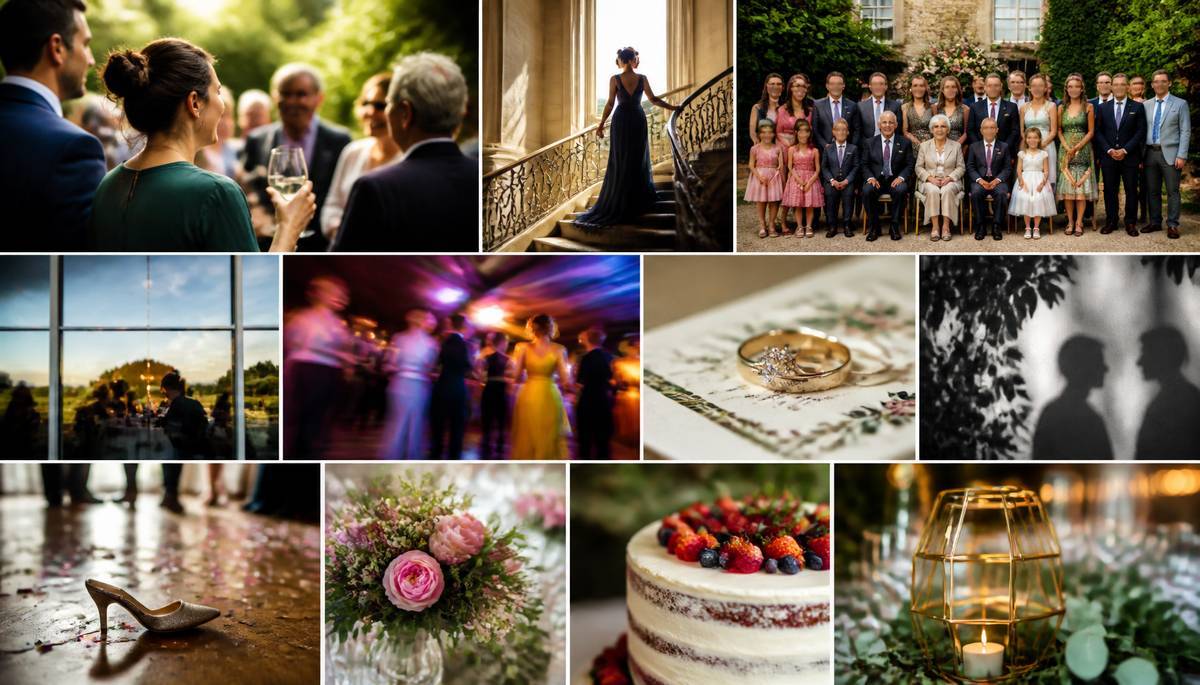 Some moments practically beg to be photographed one way, while others seem determined to misbehave the second a camera appears. A spontaneous laugh across a crowded room calls for a completely different approach from a carefully arranged family portrait, just as a dramatic architectural backdrop deserves different treatment from a pair of muddy shoes abandoned under a table.
That is why using several photography styles across a single event can create a much richer record. Documentary, editorial, traditional and experimental photography each reveal something different. Rather than forcing every scene into the same visual language, the photographer can choose the approach that best matches what is actually happening.
Documentary Photography Catches Life Before It Poses
Documentary photography works particularly well for the unpredictable parts of an event. Conversations, nervous glances, children escaping from adults, people laughing at jokes nobody else heard and relatives attempting complicated manoeuvres with folding chairs can all become valuable photographs precisely because nobody arranged them.The photographer becomes an observer rather than a director. Good documentary images preserve gestures, expressions and relationships that might otherwise disappear unnoticed. They can also reveal what an event genuinely felt like, rather than merely recording who attended and what everybody wore.
There is a seriousness to this approach too. Major occasions bring together people who may rarely occupy the same room. Years later, an apparently ordinary photograph of two relatives talking quietly may carry far more emotional weight than anyone could have anticipated when the shutter was pressed.
Editorial Photography Adds a Little Theatre
Editorial photography occupies a different territory. Here, composition, location, lighting and posing are used more deliberately to produce images with visual impact. A staircase, unusual doorway, dramatic patch of light or interesting piece of furniture might become part of a photograph rather than merely sitting politely in the background.This approach is particularly useful for portraits where there is enough time to think about shape, posture and surroundings. It can make an event feel cinematic without requiring everybody to spend three hours pretending they are starring in a perfume advertisement.
Editorial photographs also provide contrast within the final collection. After a sequence of natural candid images, a carefully constructed portrait can feel especially striking because it changes the visual rhythm.
Traditional Photographs Still Earn Their Place
Traditional group photographs occasionally receive unfair treatment because they are planned and predictable. Predictability, however, is not automatically a defect. Sometimes people simply want one photograph containing their parents, siblings and grandparents in which everyone is facing approximately the same direction and nobody has wandered off looking for coffee.Formal photographs provide clarity. They establish who was present and preserve important combinations of people that spontaneous photography might never capture by chance. Used selectively, they become valuable anchors within a broader collection rather than an endless procession of increasingly bewildered relatives.
Experimental Images Make Room for Surprise
Experimental photography gives the photographer permission to notice things differently. Reflections in windows, unusual shadows, intentional blur, silhouettes, extreme close-ups and unexpected framing can all produce images that would never emerge from a strictly conventional approach.These photographs do not necessarily need to document an event with perfect clarity. Their purpose may instead be to capture movement, atmosphere or a fleeting impression. A blurred figure crossing a dance floor might communicate energy more effectively than a technically flawless photograph in which everyone appears mysteriously frozen halfway through the Macarena.
Experimentation works best when it complements rather than dominates the collection. Fifty photographs taken through the reflection of a teaspoon might suggest that artistic enthusiasm has staged a minor coup. A handful of unusual images, however, can interrupt visual predictability and give the finished set considerably more personality.
Small Details Need Their Own Approach
Events are remembered through people, but small objects often carry surprising emotional significance. Flowers, handwritten notes, table decorations, jewellery, food, clothing and personal possessions can all become part of the story.Detail photography benefits from slowing down. While documentary work often depends upon anticipating action, photographing objects allows more control over composition, depth of field and light. These quieter images can provide useful breathing space between photographs filled with faces and activity.
They also preserve things that may physically disappear. Flowers wilt, elaborate cakes experience their inevitable encounter with a knife, decorations are packed away and carefully arranged tables eventually resemble archaeological sites containing glasses, napkins and one inexplicable abandoned shoe. Photographs give these temporary details a longer existence.
Different Moments Deserve Different Decisions
Mixing styles does not mean randomly changing techniques every few minutes. The strongest approach is responsive. The photographer considers what a particular moment needs rather than applying a predetermined formula to everything.A quiet exchange between two people might call for documentary restraint. A striking location could invite an editorial portrait. An important gathering of relatives may deserve a traditional group photograph. Movement, unusual light or reflections might offer an opportunity for experimentation.
This flexibility can also make the final photographs more truthful. Real events constantly change character. They contain formal moments and chaotic ones, periods of anticipation and bursts of activity, public performances and private exchanges. Photographing all of them identically can flatten those differences.
A Developing Situation
A varied photographic record becomes interesting partly because the viewer never quite knows what the next image will offer. A polished portrait might sit beside an unguarded laugh, followed by a close-up of a meaningful object and then an atmospheric photograph that captures little more than light and movement.Consistency still matters, particularly in editing, colour and overall presentation. But consistency does not require uniformity. A photographer can maintain a recognisable visual character while allowing individual moments to dictate how they should be photographed.
Ultimately, an event is rarely experienced in one mode. People observe, perform, laugh, wait, celebrate and occasionally stand in groups wondering whether they are supposed to look at Camera One or Camera Two. Using several photographic styles acknowledges that variety. Instead of forcing an entire day through one visual filter, it allows the photographs to change along with the event itself.
Article kindly provided by visionaire.org.uk
Latest Articles
- Why Mixing Photography Styles Can Produce a More Interesting Record of an Event
- How to Photograph a Room Without Making It Look Bigger Than It Really Is
- Why Layering a Scene Creates Wedding Photographs That Feel More Immersive
- The Quiet Design Details That Make Wedding Memories Feel More Personal
- The Psychology of Ceiling Height: How Vertical Space Changes the Way We Feel
- The Hidden Power of Product Demonstrations: Why Showing Beats Telling
- Beyond Family Portraits: Unexpected Photos That Make Stunning Wall Art
- Designing for Trust: The Hidden Visual Signals That Shape First Impressions
- Why Banner Design Is Still One of the Most Effective Local Marketing Tools
- Designing for Impatient People, and Why That's a Good Thing
- Borrowing Film Planning Techniques for Better Graphic and Web Design
- Designing with Light Instead of Filters: How Atmosphere Shapes a Photograph
- The Scent Wardrobe Principle: Designing Your Fragrance Collection Like an Interior Space
- How Small Visual Details Change the Entire Mood of an Image
- Turning Everyday Lighting Into a Design Feature
- Designing Photo Albums That People Actually Revisit
- Designing Illusions: How Sliding Wardrobe Doors Can Visually Reshape a Room
- Fit Over Fashion Why Tailoring Matters More Than Trends for Formalwear
- Why Fast Websites Matter More Than Beautiful Ones When People Are Choosing Where to Eat
- When Product Photos Quietly Sabotage Online Sales
- Architecture
- Graphic Design
- Web Design
- Industrial Design
- Interior Design
- Fashion Design
- Photography
- Product Design
- UI/UX Design
- Landscape Design
- Animation
- Industrial Engineering
- Packaging Design
- Branding and Identity Design
- Exhibit Design
- Advertising Design
- Typography
- Motion Graphics
- Sustainable Design
- User Research
- Fashion Merchandising
- Film and Video Production
- UX Writing
- Environmental Design
- Print Design
- Interaction Design
- Art Direction
- Textile Design
- Game Design
- Virtual Reality (VR) Design
- General Design Principles
- Event and Wedding Design