

Why Photographing Clothes Without People Is Surprisingly Difficult
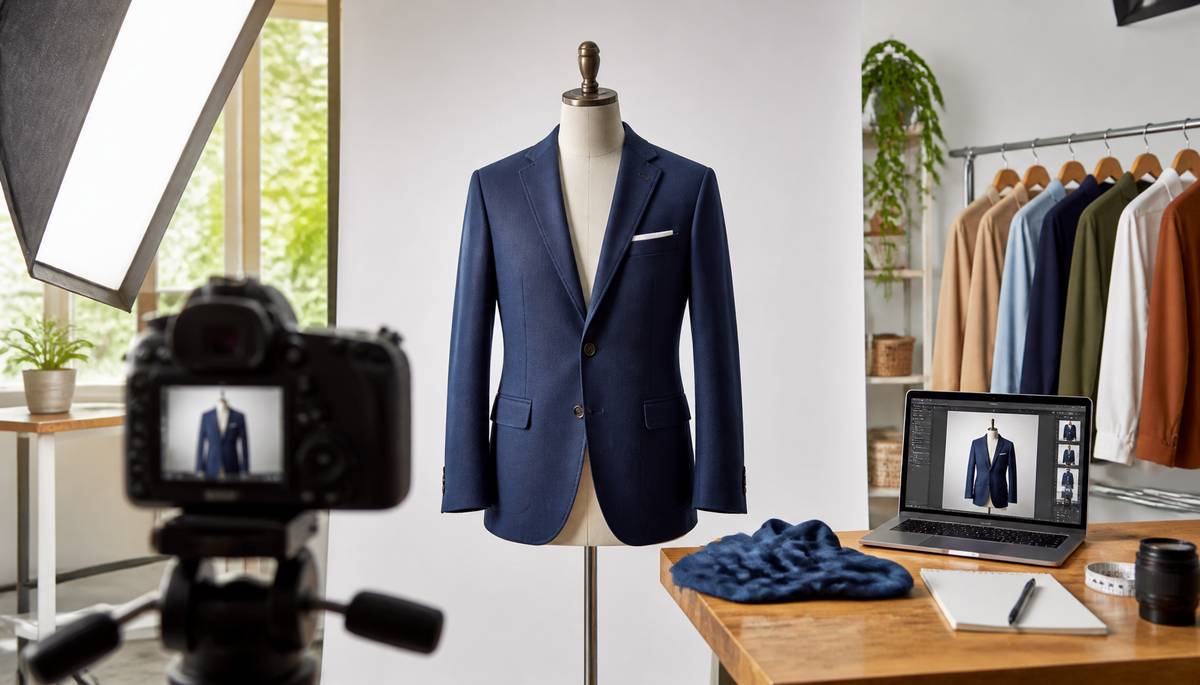 A perfectly respectable jacket can look like a defeated scarecrow the moment its owner steps out of it. Sleeves collapse, shoulders sag, and the carefully tailored waist becomes an unexplained collection of folds. Photographing clothing without a human body to support it presents challenges that even experienced photographers occasionally underestimate.
For independent clothing retailers and second-hand sellers, these difficulties matter. Customers want to understand how garments look, fit and feel before spending money. Unfortunately, an expensive dress photographed badly can resemble something rescued from the bottom of a laundry basket.
Why Clothes Need Something to Hold Them Up
Clothing is designed around the human body. Shoulders support jackets, hips give trousers their shape, and movement helps fabrics fall naturally. Remove the wearer, and much of that structure disappears.A shirt laid flat on a table might display its colour and pattern accurately, but it reveals relatively little about how the garment hangs. Photographing the same shirt on a hanger introduces different problems, particularly around the shoulders and sleeves.
One practical solution is to use inexpensive dress forms or mannequins. These provide enough structure to demonstrate a garment's intended shape without requiring a professional model. However, sellers should choose forms that closely match the clothing's size. Stretching a small blouse over an oversized mannequin might create an impressive photograph, but it also creates unrealistic expectations.
Ghost Mannequins and the Art of Invisible Support
Ghost mannequin photography sounds suspiciously like a supernatural activity, but the technique is entirely practical.The process involves photographing clothing on a mannequin and then digitally removing the mannequin, leaving the garment appearing naturally filled out by an invisible wearer.
Professional photographers often combine several images to achieve this effect. For example, a jacket might be photographed normally, followed by a separate photograph showing its interior collar. Editing software combines these photographs to produce a convincing three-dimensional appearance.
Smaller retailers can experiment with this technique using affordable mannequins, consistent lighting and basic image-editing software. The important consideration is maintaining realistic proportions. Excessive digital reshaping can make a garment appear considerably different from the item customers eventually receive.
Wrinkles Are Not Always the Enemy
Few things undermine a clothing photograph faster than an enormous crease running across the front of an otherwise attractive garment.Steaming or carefully ironing clothes before photography is usually worthwhile. Even second-hand garments benefit from basic preparation, particularly when customers are judging their condition from photographs.
However, eliminating every visible fold can be counterproductive. Linen naturally creases, soft cotton gathers, and heavier fabrics develop characteristic folds around seams.
The objective is not to make clothing look artificially perfect. It is to distinguish between wrinkles caused by careless storage and those that genuinely demonstrate how the fabric behaves.
Symmetry Matters More Than You Might Think
A jacket with one sleeve hanging lower than the other can look strangely unsettling, even when viewers cannot explain why. Human beings are remarkably sensitive to visual imbalance, particularly when examining familiar objects such as clothing.Before taking a photograph, check that collars sit evenly, buttons align correctly and sleeves fall naturally. For flat-lay photography, use a ruler or the camera's gridlines to establish a consistent centre.
Perfect symmetry is not always desirable. A casually folded sleeve or slightly angled hem can make an outfit feel more natural. However, these decisions should appear intentional rather than suggesting that the photographer abandoned the arrangement halfway through to answer the door.
Showing Fit Without Showing a Person
One of the biggest limitations of mannequin-free clothing photography is communicating fit. Customers need to understand whether a garment is loose, fitted, cropped, oversized or unusually long.Photographs alone cannot always answer these questions, particularly when different manufacturers interpret clothing sizes differently.
Independent retailers can address this by including clear measurements alongside their images. Chest width, shoulder width, sleeve length and overall garment length are especially useful. For trousers, waist measurements, inseam length and leg opening dimensions provide valuable additional information.
Photographing garments from several angles also helps. A front view might reveal the overall design, while side and rear photographs demonstrate shaping, seams and construction details.
For second-hand clothing, photographs of labels, fabric composition and any visible wear are particularly important. Customers are generally more forgiving of imperfections they know about than unpleasant surprises arriving through the letterbox.
Lighting Can Make or Break the Fabric
Lighting influences how customers interpret texture, colour and quality. Harsh direct light can exaggerate wrinkles, while excessively flat lighting removes the shadows that help communicate shape.Soft, diffused daylight is an excellent starting point for smaller sellers. Positioning clothing near a large window, away from direct sunlight, often produces attractive results without expensive equipment.
A white reflector or even a large sheet of white cardboard can soften shadows on the opposite side of the garment.
Consistency matters too. Photographing one jumper under warm bedroom lighting and another beside a cool daylight window can make identical colours appear surprisingly different.
Dressing for Photographic Success
Professional-looking clothing photography does not necessarily require professional equipment. A reasonably capable camera, consistent background, careful preparation and a little patience can produce excellent results.The most important principle is honesty. Photographs should make garments appealing while accurately representing their shape, texture, colour and condition.
For independent retailers, this approach can reduce misunderstandings, improve customer confidence and potentially lower return rates. For second-hand sellers, it can help ordinary garments stand out in crowded marketplaces.
Clothes might be designed to look their best on people, but with thoughtful presentation, they can still make an excellent impression when nobody is wearing them. Even that troublesome jacket can regain its dignity without requiring someone to stand inside it.
Article kindly provided by photogpro.com
Latest Articles
- Why Photographing Clothes Without People Is Surprisingly Difficult
- How Painted Skies Transform the Atmosphere of a Room
- Why a Simple Home Redesign Can Become a Plumbing Engineering Project
- Why Mixing Photography Styles Can Produce a More Interesting Record of an Event
- How to Photograph a Room Without Making It Look Bigger Than It Really Is
- Why Layering a Scene Creates Wedding Photographs That Feel More Immersive
- The Quiet Design Details That Make Wedding Memories Feel More Personal
- The Psychology of Ceiling Height: How Vertical Space Changes the Way We Feel
- The Hidden Power of Product Demonstrations: Why Showing Beats Telling
- Beyond Family Portraits: Unexpected Photos That Make Stunning Wall Art
- Designing for Trust: The Hidden Visual Signals That Shape First Impressions
- Why Banner Design Is Still One of the Most Effective Local Marketing Tools
- Designing for Impatient People, and Why That's a Good Thing
- Borrowing Film Planning Techniques for Better Graphic and Web Design
- Designing with Light Instead of Filters: How Atmosphere Shapes a Photograph
- The Scent Wardrobe Principle: Designing Your Fragrance Collection Like an Interior Space
- How Small Visual Details Change the Entire Mood of an Image
- Turning Everyday Lighting Into a Design Feature
- Designing Photo Albums That People Actually Revisit
- Designing Illusions: How Sliding Wardrobe Doors Can Visually Reshape a Room
- Architecture
- Graphic Design
- Web Design
- Industrial Design
- Interior Design
- Fashion Design
- Photography
- Product Design
- UI/UX Design
- Landscape Design
- Animation
- Industrial Engineering
- Packaging Design
- Branding and Identity Design
- Exhibit Design
- Advertising Design
- Typography
- Motion Graphics
- Sustainable Design
- User Research
- Fashion Merchandising
- Film and Video Production
- UX Writing
- Environmental Design
- Print Design
- Interaction Design
- Art Direction
- Textile Design
- Game Design
- Virtual Reality (VR) Design
- General Design Principles
- Event and Wedding Design