

How to Photograph a Room Without Making It Look Bigger Than It Really Is
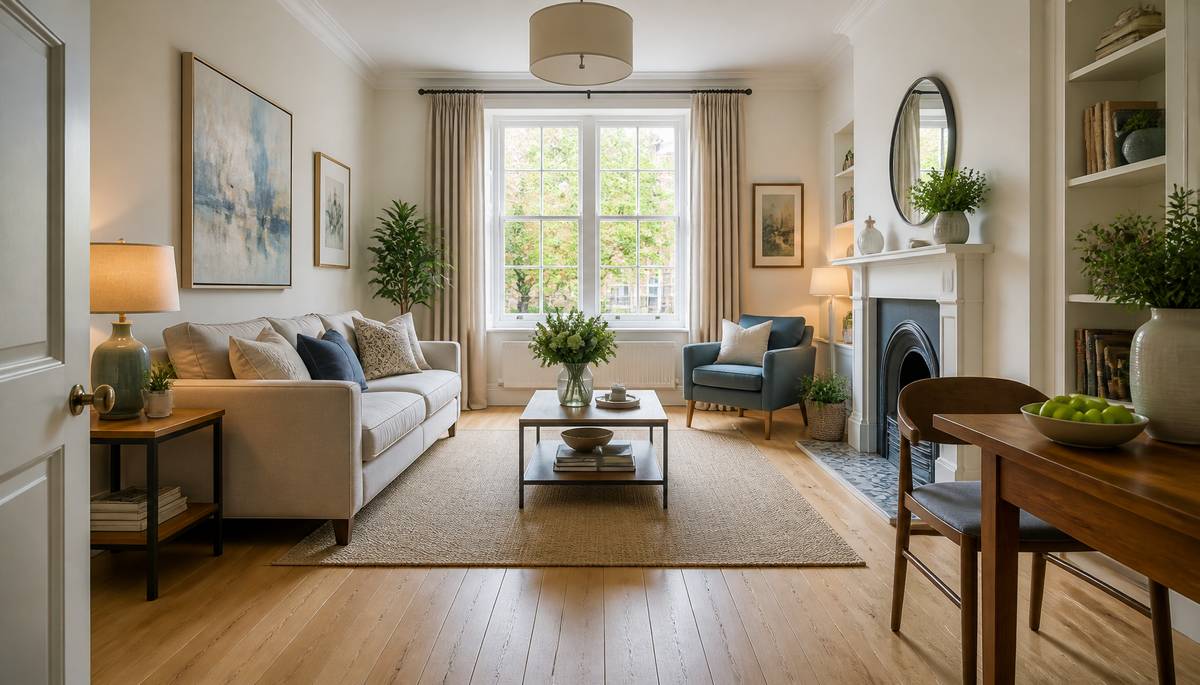 A camera can turn a modest sitting room into something resembling an aircraft hangar with surprisingly little effort. Ultra-wide lenses, low viewpoints and ambitious angles can all make an interior appear far larger than it feels when someone actually walks through the door. Attractive interior photography does not require this kind of visual inflation. The aim should be to make a room look appealing while still allowing viewers to understand its genuine proportions.
That balance matters particularly when photographs are being used to present hotels, rental properties, homes or commercial interiors. A beautiful photograph creates interest; an implausibly spacious one creates expectations that the real room may struggle to meet.
Choose a Lens That Respects the Walls
Wide-angle lenses are useful because interiors rarely provide photographers with unlimited space to retreat. Problems begin when the lens becomes so wide that objects near the edges appear stretched and distant walls seem to have been pushed halfway into the neighbouring postcode.Rather than automatically choosing the widest lens available, start with a moderately wide focal length and move backwards where practical. The precise focal length depends on the camera format and room size, but the principle remains the same: use only as much width as the composition genuinely needs.
Look closely at furniture near the edges of the frame. A chair that appears twice as broad as its identical companion in the centre is a useful warning sign. Doors, tables and lamps are particularly good distortion detectors because people instinctively understand roughly what shape they should be.
Camera Height Changes More Than You Think
Camera height has a substantial effect on how viewers perceive a room. Shooting from close to the floor can exaggerate foreground space, making carpets and floorboards dominate the image while furniture appears strangely monumental. Photographing from excessive height creates the opposite problem, turning the room into something resembling a floor plan with cushions.A sensible starting position is often somewhere around chest height, adjusted according to the furniture and purpose of the room. Kitchens may benefit from a slightly higher viewpoint so worktops remain visible, while bedrooms can often be photographed somewhat lower without losing important information.
What matters is that the viewpoint feels natural. Imagine where a person standing in the room would actually look from, then make small adjustments rather than searching immediately for the most dramatic possible perspective.
Keep the Camera Level
Tilting the camera upward or downward introduces converging vertical lines. Walls begin leaning, doorframes narrow toward one end and wardrobes acquire architectural ambitions they were never designed to have.Keeping the camera level helps walls remain vertical and gives viewers a much clearer sense of the room’s real shape. It also produces photographs that feel calmer and more deliberate, allowing the interior itself to provide the visual interest rather than relying on exaggerated perspective.
Shoot From Somewhere Believable
Corners are tempting positions because they allow the camera to capture a large amount of the room. Unfortunately, squeezing the lens into the furthest possible corner can also exaggerate depth. The nearest furniture becomes enormous while objects at the opposite end seem to have applied for residency in another county.Try moving slightly away from the corner or photographing more directly across the room. Straight-on compositions can be particularly effective because they show the relationship between walls, windows and furniture without introducing excessive diagonal lines. They may capture less of the space, but what they do capture is often much easier to understand.
Doorways can also provide natural shooting positions. Photographing from approximately where someone would enter a room creates a perspective that corresponds with the experience of actually using the space.
Let Furniture Provide a Sense of Scale
Removing too much furniture can make a small room appear larger, but it can also leave viewers without useful visual references. Familiar objects provide scale. Beds, dining tables, chairs and sofas help the eye estimate distances almost automatically.This does not mean every available chair needs to report for photographic duty. Clutter can certainly be removed, and furniture may be repositioned slightly to improve the composition. However, completely stripping a room in pursuit of apparent square footage can produce an oddly vacant image that communicates very little about how the space functions.
Where possible, retain enough furniture to explain the layout. A compact dining area can still look attractive precisely because it is compact. Four chairs fitting comfortably around a table may communicate more useful information than an enormous patch of strategically manufactured empty floor.
Watch What Happens at the Edges
Distortion tends to become most obvious around the perimeter of a wide-angle photograph. Before taking the final shot, inspect the edges carefully. Look for elongated lamps, stretched armchairs, unusually broad doorways and other signs that the lens is beginning to rewrite the building specifications.Sometimes the solution is simply to narrow the field of view slightly. Taking one step backwards and using a less extreme focal length can produce a more convincing photograph. Where stepping backwards is impossible, consider creating several compositions rather than forcing everything into one frame.
A wide photograph can establish the layout, while additional medium shots and details explain features that cannot comfortably fit within it. No single photograph has to perform the duties of an architectural survey.
Keeping Things in Perspective
Good interior photography does not have to make every room look enormous. It needs to make the room look good, understandable and believable. Careful lens selection, sensible camera height, level verticals and restrained shooting angles can accomplish that without sacrificing visual appeal.There is also a practical advantage to accuracy. Someone viewing the photograph can form realistic expectations about the space before seeing it personally. That matters whether the interior belongs to a hotel, holiday rental, property listing or commercial venue.
A small room photographed intelligently can look warm, elegant and thoughtfully arranged without pretending it contains an undiscovered east wing. Ultimately, successful interior photography is less about manufacturing space than describing it well. Get the perspective right, and there is no need to stretch the room — or the truth.
Article kindly provided by gdholland.co.uk
Latest Articles
- Why Mixing Photography Styles Can Produce a More Interesting Record of an Event
- How to Photograph a Room Without Making It Look Bigger Than It Really Is
- Why Layering a Scene Creates Wedding Photographs That Feel More Immersive
- The Quiet Design Details That Make Wedding Memories Feel More Personal
- The Psychology of Ceiling Height: How Vertical Space Changes the Way We Feel
- The Hidden Power of Product Demonstrations: Why Showing Beats Telling
- Beyond Family Portraits: Unexpected Photos That Make Stunning Wall Art
- Designing for Trust: The Hidden Visual Signals That Shape First Impressions
- Why Banner Design Is Still One of the Most Effective Local Marketing Tools
- Designing for Impatient People, and Why That's a Good Thing
- Borrowing Film Planning Techniques for Better Graphic and Web Design
- Designing with Light Instead of Filters: How Atmosphere Shapes a Photograph
- The Scent Wardrobe Principle: Designing Your Fragrance Collection Like an Interior Space
- How Small Visual Details Change the Entire Mood of an Image
- Turning Everyday Lighting Into a Design Feature
- Designing Photo Albums That People Actually Revisit
- Designing Illusions: How Sliding Wardrobe Doors Can Visually Reshape a Room
- Fit Over Fashion Why Tailoring Matters More Than Trends for Formalwear
- Why Fast Websites Matter More Than Beautiful Ones When People Are Choosing Where to Eat
- When Product Photos Quietly Sabotage Online Sales
- Architecture
- Graphic Design
- Web Design
- Industrial Design
- Interior Design
- Fashion Design
- Photography
- Product Design
- UI/UX Design
- Landscape Design
- Animation
- Industrial Engineering
- Packaging Design
- Branding and Identity Design
- Exhibit Design
- Advertising Design
- Typography
- Motion Graphics
- Sustainable Design
- User Research
- Fashion Merchandising
- Film and Video Production
- UX Writing
- Environmental Design
- Print Design
- Interaction Design
- Art Direction
- Textile Design
- Game Design
- Virtual Reality (VR) Design
- General Design Principles
- Event and Wedding Design